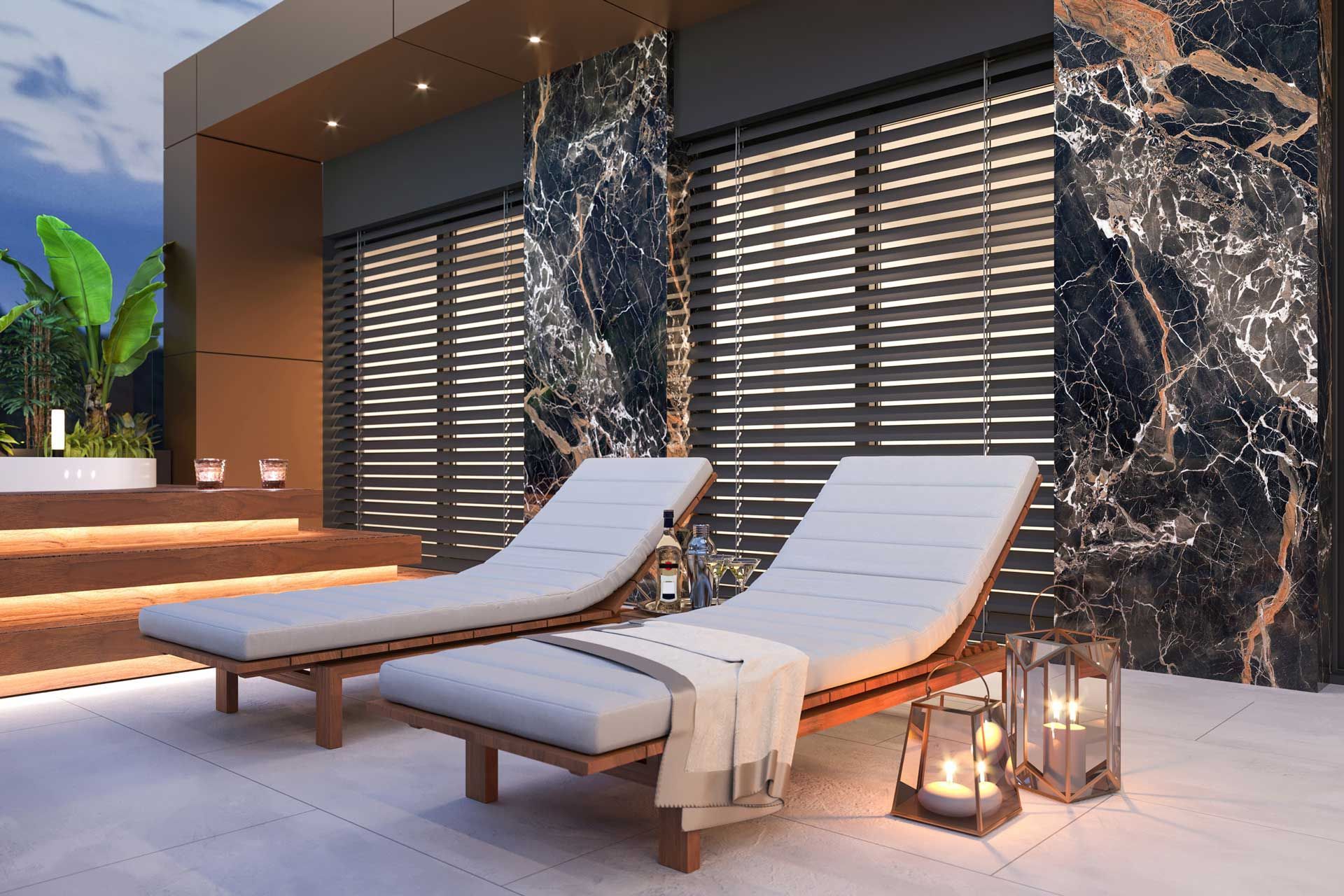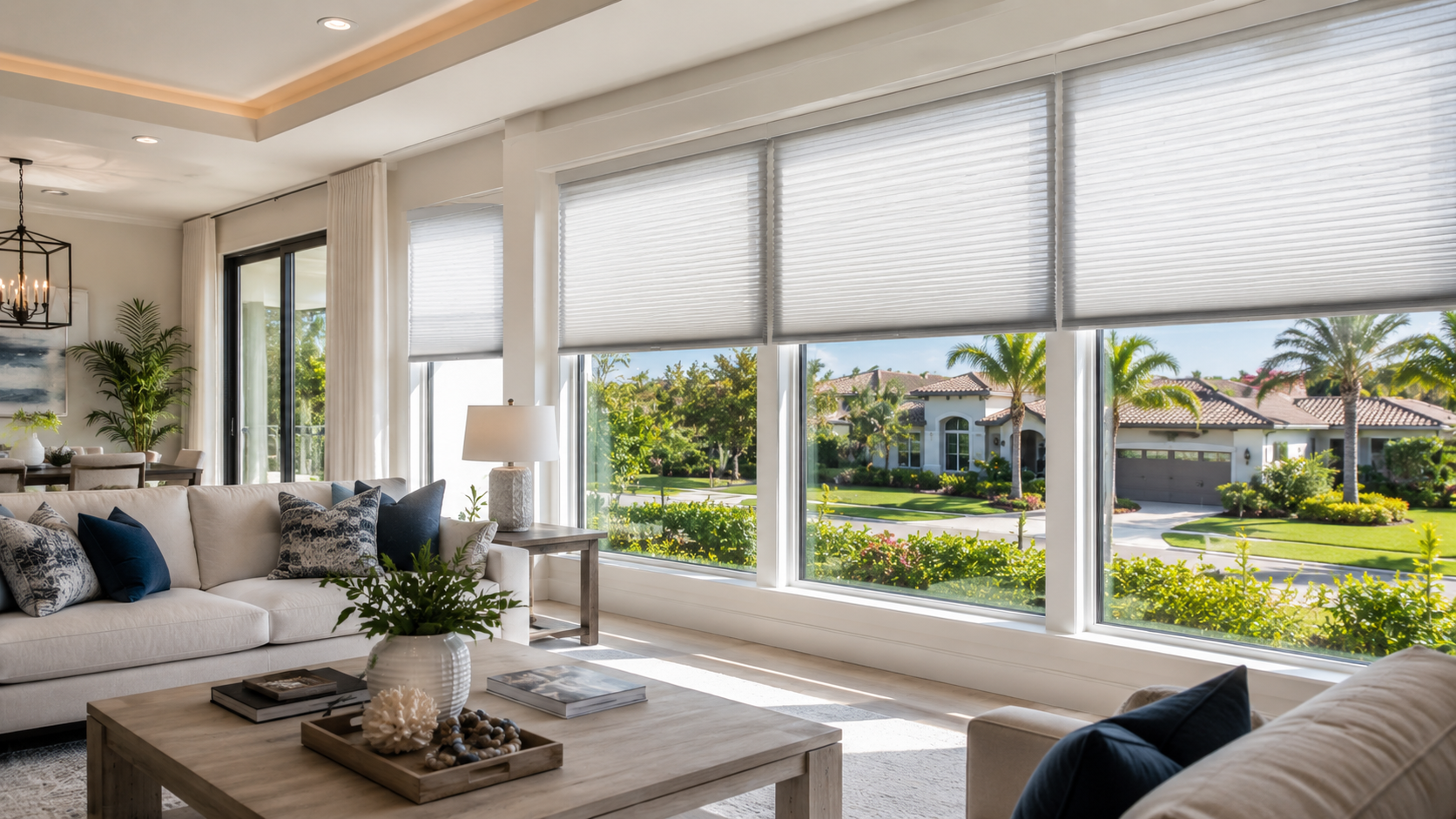
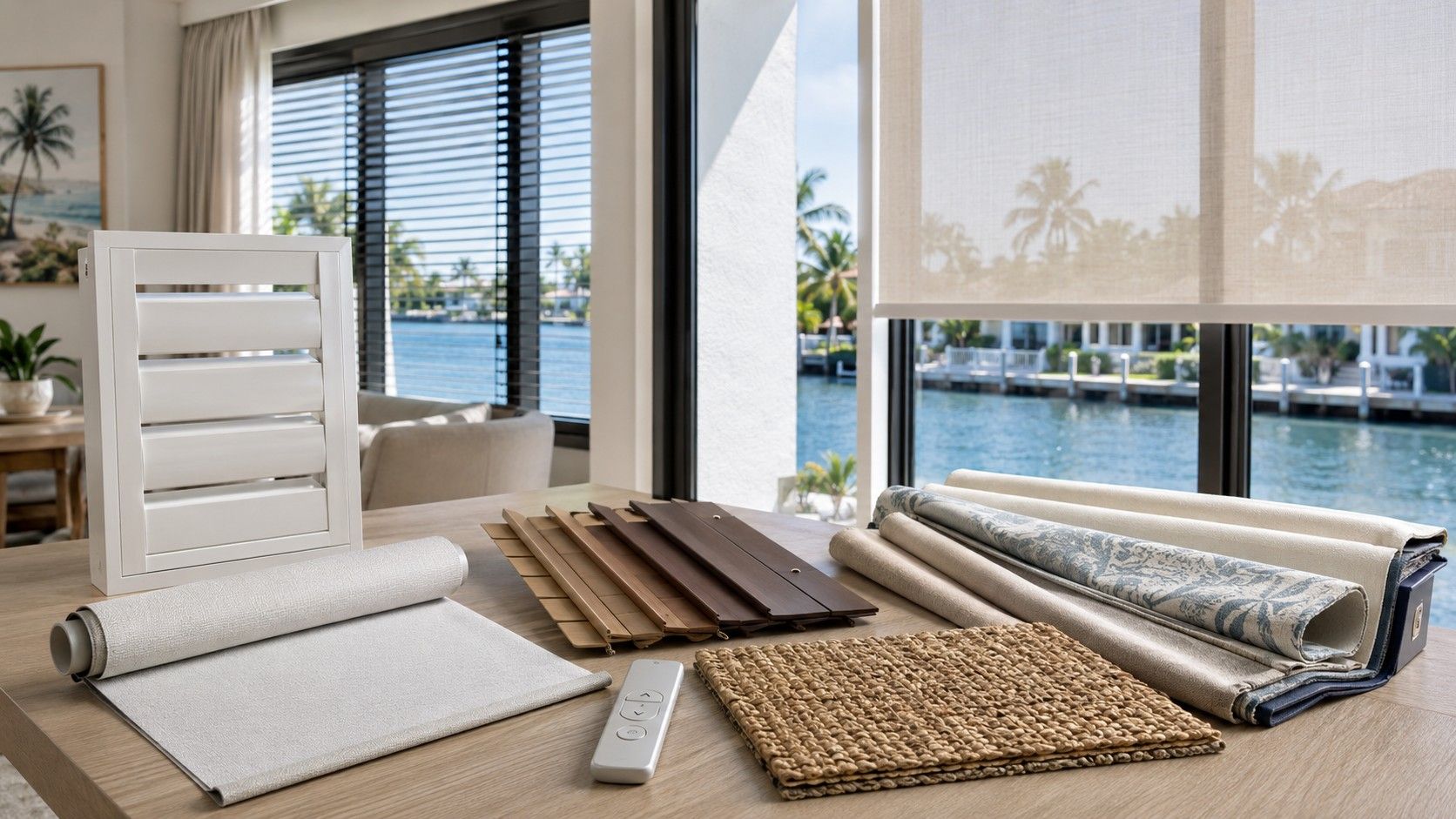
A waterfront home in Delray Beach has four window treatment problems that landlocked homes never face. Getting them wrong is expensive. Getting them right changes how you live in the home.
Glare. UV. Salt air. The view. Here is how to solve all four.
The reason people buy waterfront homes in Delray Beach is the water. The Atlantic rising in the east. The Intracoastal at golden hour to the west. Lake Ida catching the afternoon light. The view is not incidental to the home — it is the point of the home. Everything else, including the window treatments, has to work around that fact.
But waterfront properties in Delray Beach also come with a set of environmental conditions that standard window treatments are not designed to handle. The Atlantic sun at this latitude is not the same as sun in Atlanta or Chicago — it is more intense, present for more hours of the year, and comes with reflected glare off the water that amplifies its effect inside the home. Salt air within a few hundred feet of the ocean or Intracoastal degrades materials faster than most buyers account for when making their initial purchase. And the homes themselves tend to have large expanses of glass — floor-to-ceiling, wall-spanning, oriented toward the water — that create scale and installation challenges that a standard residential window simply does not.
Surfside Blinds installs window treatments in waterfront homes throughout Delray Beach. Here is the honest guide to what works and what does not.
Problem One — Glare
Reflected glare off the water is categorically different from direct sunlight through a north-facing window. It comes from below and at angles that standard light-filtering treatments are not optimized to handle. In an east-facing room along the Atlantic corridor — in the coastal neighborhoods between George Bush Boulevard and Linton — the glare begins at sunrise and sustains through mid-morning at an intensity that makes screens unreadable and surfaces uncomfortably bright. West-facing Intracoastal rooms get a version of the same problem in the afternoon, compounded by the lower sun angle that puts direct light deeper into the room.
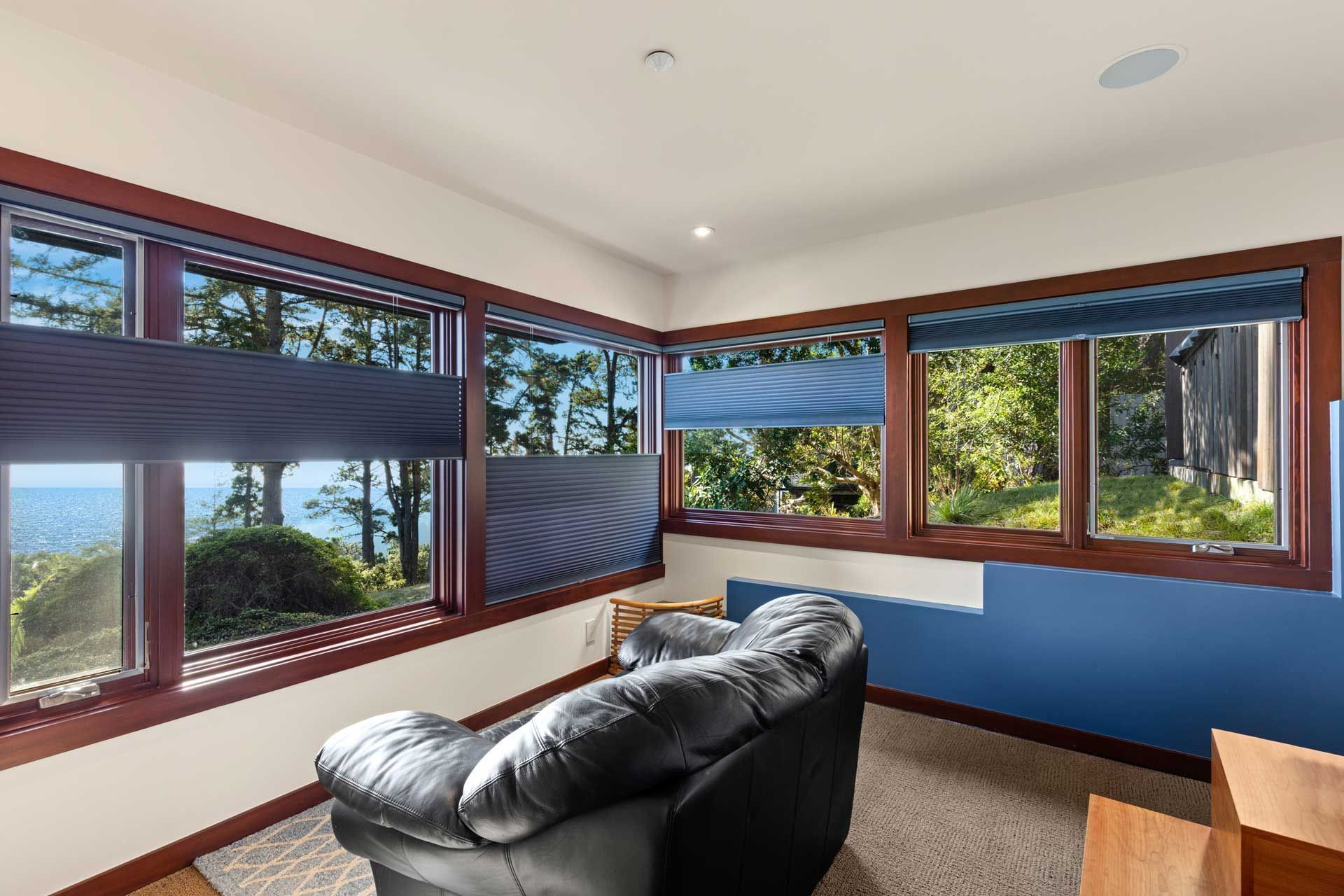
The solution that consistently works for waterfront glare in Delray Beach is solar shades with a 3% to 5% openness factor on the highest-exposure windows. The openness factor — the percentage of the weave that is open versus solid — controls how much light passes through. A 5% openness factor reduces visible light transmission dramatically while preserving a clear view through the fabric. A 3% openness factor provides stronger glare reduction for rooms with the most severe Atlantic exposure. A 1% factor is the maximum light reduction available while still allowing some view through — appropriate for rooms that face directly into the morning sun at its strongest.
"The view is the reason you bought the home. The right solar shade protects you from the glare without taking the view away."
What does not work for waterfront glare: standard fabric shades that filter light generally but are not engineered for solar radiation specifically, horizontal blinds that create slat-pattern glare across surfaces, and plantation shutters closed against the light — they block the view entirely when the glare is worst, which defeats the purpose of the waterfront orientation.
Problem Two — UV
UV radiation is the silent damage problem in Delray Beach waterfront homes. It is not dramatic like glare — it does not announce itself every morning. But over months and years of unfiltered Florida sun, it fades hardwood floors, bleaches upholstery, damages artwork, and degrades anything in the path of direct or reflected solar radiation. In a home where the interior finishes represent a serious investment, UV protection is not optional.
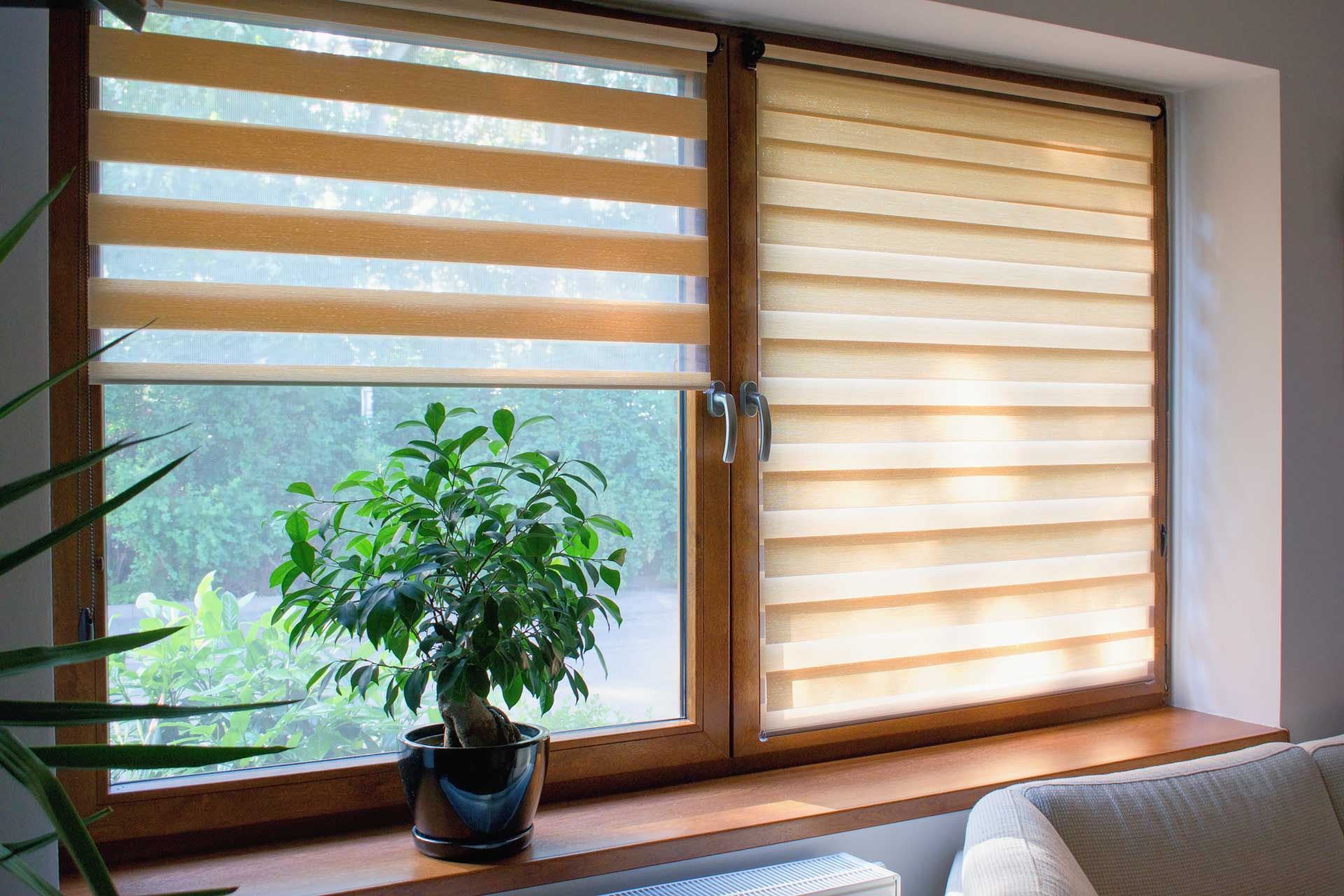
Solar shades with UV-resistant fabric specifications block the ultraviolet radiation that causes this damage without blocking the visible light that lets you see and enjoy the view. The key specification is solution-dyed fabric — meaning the colorant is built into the fiber during manufacturing rather than applied to the surface afterward. Solution-dyed fabrics retain their color and UV-blocking properties over years of direct coastal sun exposure. Surface-dyed fabrics yellow, fade, and lose their protective properties within one to two seasons in Delray Beach's coastal UV environment. This is not a minor difference — it is the difference between a shade that looks and performs the same in year seven as it did on installation day, and one that needs replacement inside three years.
What to ask about fabric specification: When reviewing shade samples, ask specifically whether the fabric is solution-dyed or surface-dyed. Ask for the fabric's UV protection rating. Ask which fabrics the manufacturer rates for coastal installation. A reputable local installer will know these specifications for every fabric they carry. If the answer is vague, the fabric is probably not the right choice for a Delray Beach waterfront property.
Problem Three — Salt Air
Salt air attacks materials at a molecular level. For window treatments in Delray Beach waterfront homes — particularly on A1A, the Intracoastal corridor, and Lake Ida properties — material selection is the most consequential decision you make. The wrong materials reveal themselves in year three or four, when a product that seemed fine on installation day begins to show warping, corrosion, yellowing, or fabric deterioration that is consistent with ongoing salt air exposure rather than normal wear.
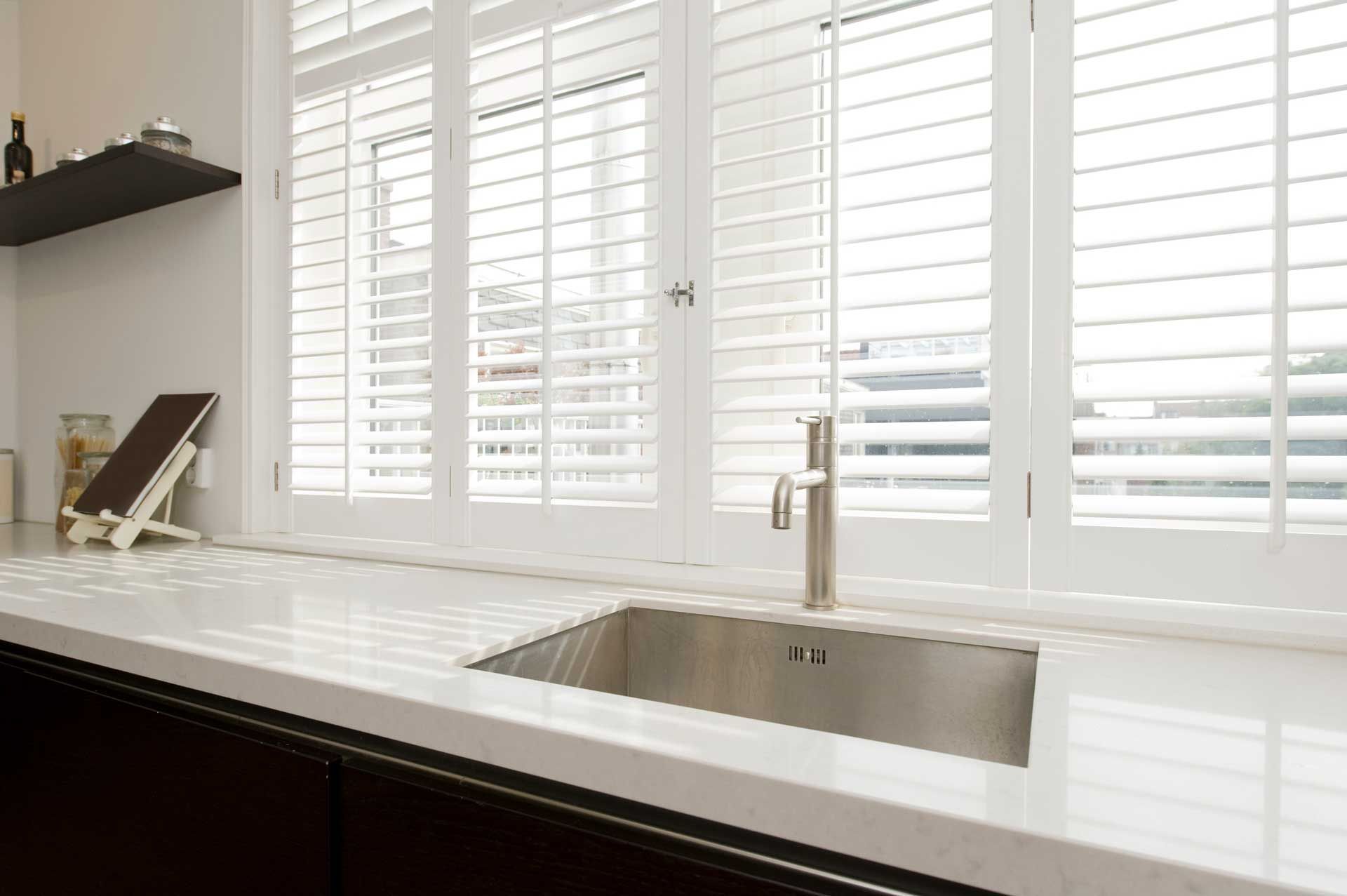
For plantation shutters in waterfront rooms, composite and polywood materials are the only correct specification. Real wood shutters warp in the humidity and salt air of a coastal Delray Beach property faster than their lifespan projections suggest. The visual quality of a premium composite shutter is indistinguishable from wood at normal viewing distances. The durability difference in a salt air environment over ten years is significant and measurable.
For hardware — the brackets, tracks, and mounting components of any window treatment — marine-grade aluminum or stainless steel is the correct specification. Standard hardware corrodes in coastal conditions and typically shows visible deterioration within two to four years. Marine-grade hardware is specified for exactly this environment and carries warranties that reflect its actual performance in coastal installations.
For shade fabrics, coated polyester and solution-dyed acrylic weaves are the correct coastal specifications. Both resist the salt spray, moisture, and UV that degrade standard shade fabrics in waterfront environments.
The cheap option always costs more in a waterfront home. A standard shade that fails in three years in a Delray Beach waterfront property costs more over ten years than a properly specified coastal product installed once. Budget for the right material the first time. The replacement cost of an undersized solution in a salt air environment is the most predictable expense in home maintenance — and the most avoidable.
Problem Four — The View
Every other window treatment decision in a waterfront home runs through this one. The view is not a feature to be managed around — it is the reason the home exists and the standard against which every treatment choice is measured. Anything that obscures the view when it should be open is not the right solution for a waterfront Delray Beach home, no matter how well it performs on the other three problems.
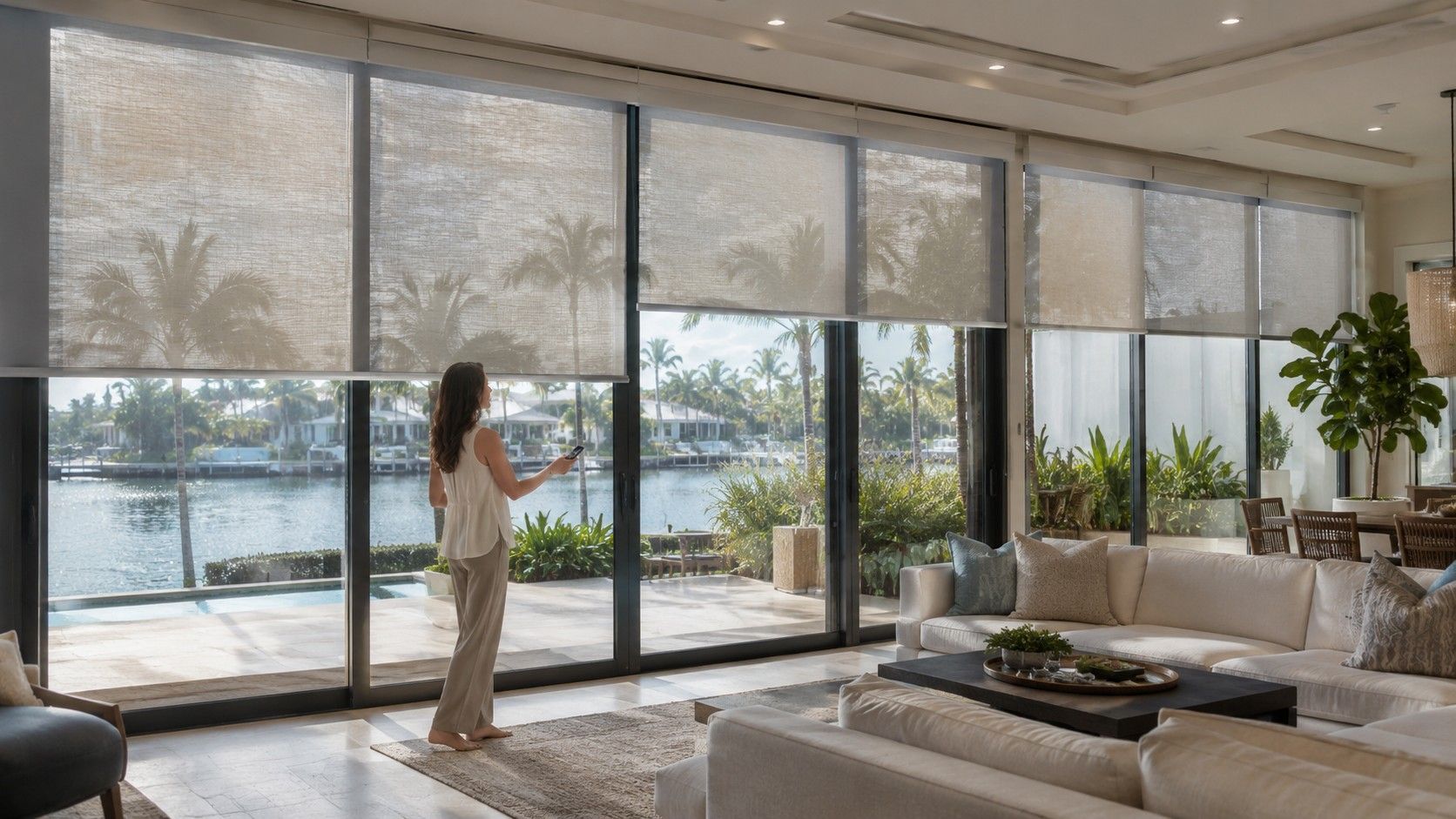
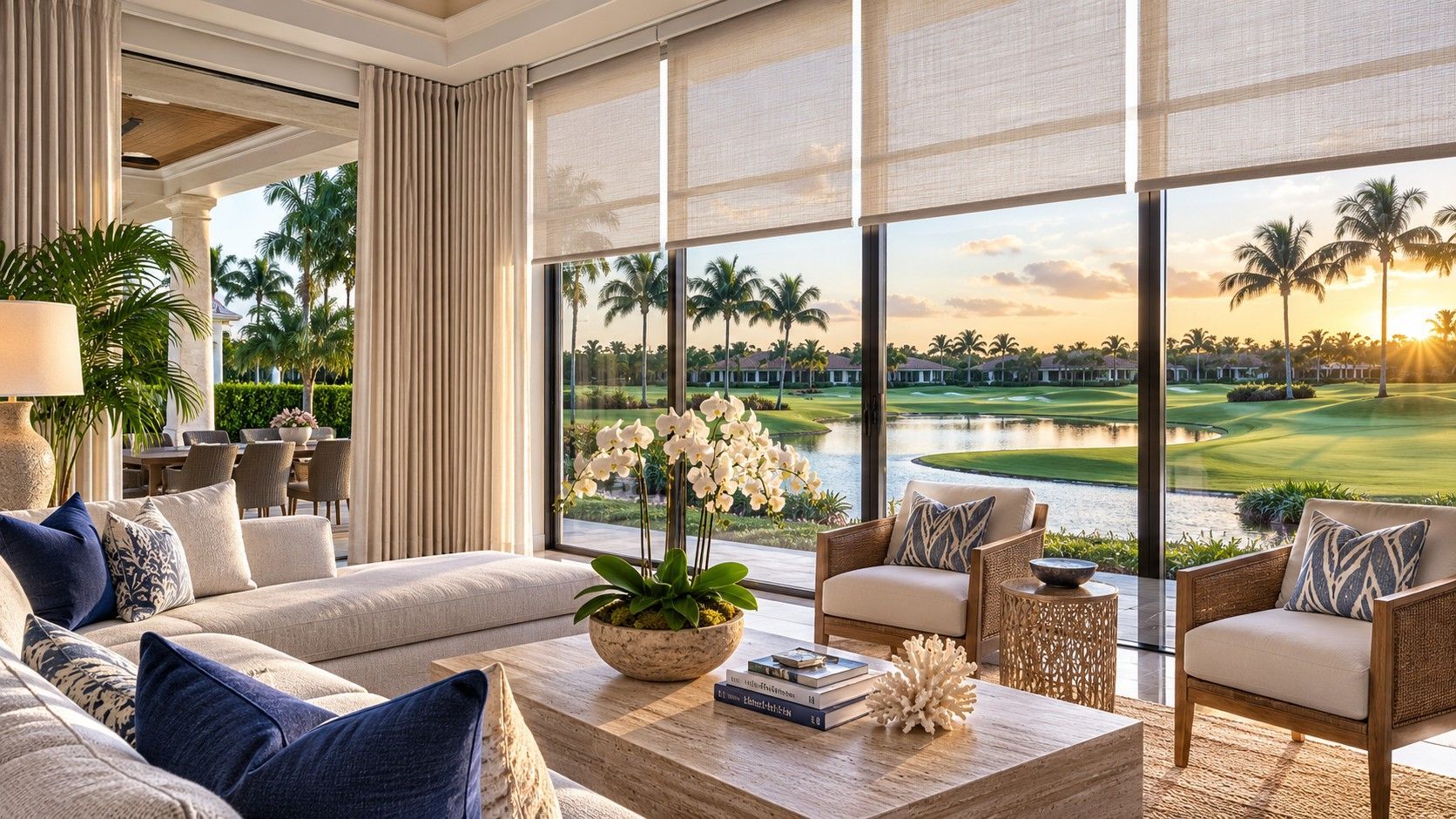
This is why motorized solar shades are the dominant product in Delray Beach waterfront homes. When raised, they disappear into a slim headrail — the view is completely unobstructed. When lowered, they filter glare and UV while leaving the water view visible through the fabric. The shade is effectively invisible when you are looking out — it reads as a slight tonal shift in the glass, not as a barrier between you and the Atlantic or the Intracoastal.
The motorization component is not a luxury upgrade in a waterfront home — it is what makes the system practical. A manual shade you need to walk to and physically operate every time the light shifts is not a system that gets used consistently. A motorized shade on a schedule that closes when the glare peaks and opens when it passes does its job every day without requiring your attention. For waterfront rooms with multiple large windows, coordinated motorized control means the entire wall of glass responds to a single command rather than requiring individual operation of each shade.
Room by Room — What Works Where
East-Facing Ocean or Water View
Motorized solar shade, 3-5% openness, solution-dyed fabric. Schedule to lower before sunrise peak and raise by mid-morning. Preserve the Atlantic view through the fabric when down.
West-Facing Intracoastal View
Motorized solar shade, 5% openness. Afternoon sun angle is lower — 5% provides sufficient glare reduction while preserving the water view and the signature Intracoastal light at golden hour.
Master Bedroom — Water View
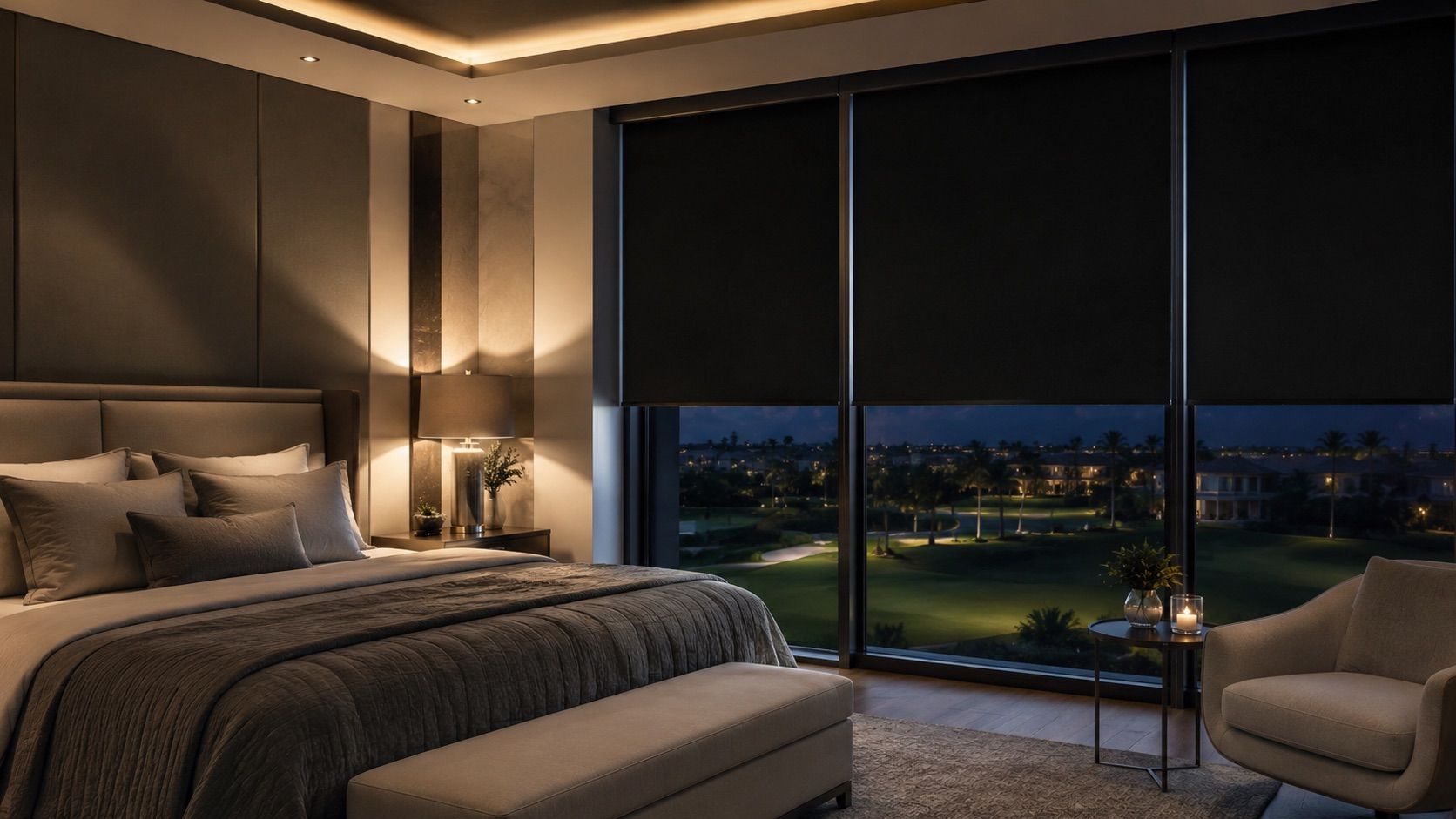
Dual shade system: motorized solar shade for daytime view preservation plus motorized blackout liner for complete darkness at night and early morning. Both operate independently from one remote.
Non-Water-Facing Rooms
Composite plantation shutters in moisture-resistant material. No view to preserve — shutters provide superior light control, HOA compliance, and long-term durability in the coastal humidity environment.
Kitchen and Bathrooms
Composite plantation shutters or moisture-resistant faux wood blinds. High-humidity rooms — real wood is a poor choice here regardless of proximity to water. PVC or composite holds indefinitely.
Sliding Glass Doors
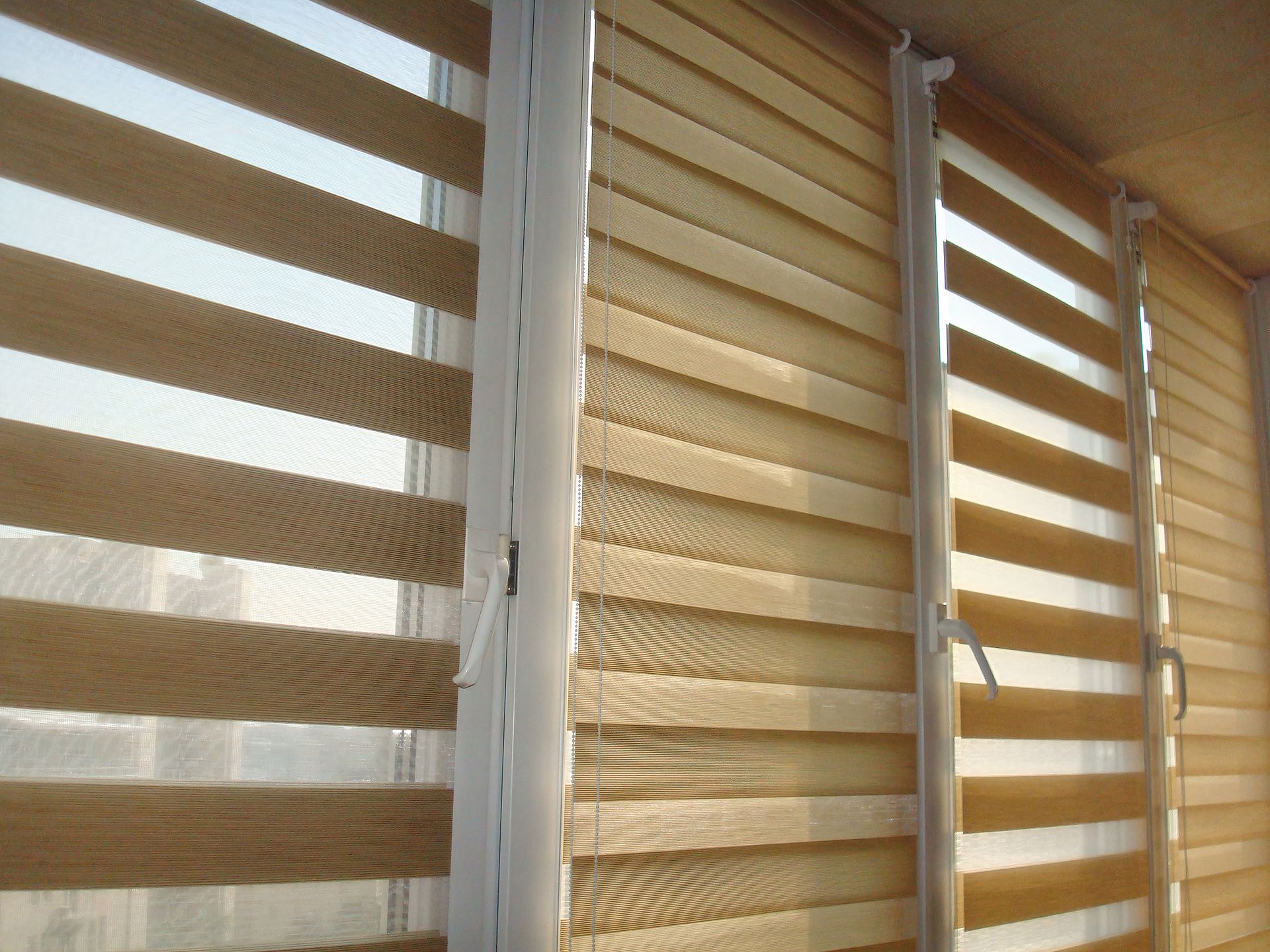
Wide-format motorized roller shade spanning the full door width, or motorized panel track system for very large openings. Vertical blinds are the wrong product for waterfront-facing sliding doors at every price point.
Motorization in Waterfront Homes — Why It Is Not Optional
The case for motorization is stronger in a waterfront Delray Beach home than almost anywhere else. The windows are larger. The sun exposure is more intense and changes direction across multiple sides of the home throughout the day. The need to adjust treatments is more frequent. And the consequence of not adjusting them — UV damage to high-value interior finishes — is more significant than in a home where the sun exposure is moderate and manageable manually.
For waterfront homes with existing smart home systems — Lutron, Control4, Crestron, or others — motorized shades integrate directly into existing scenes and schedules. A morning scene that raises the ocean-facing shades as the glare subsides. An afternoon scene that lowers the Intracoastal shades before the sun hits its peak angle. An away mode that keeps all shades in a UV-protective position while the home is unoccupied. These are not hypothetical capabilities — they are standard configurations we set up in Delray Beach waterfront homes regularly.
For homes without an existing automation system, standalone motorized shades operate perfectly well with a basic remote or wall switch. The automation layer is available when you want it and entirely optional when you do not.
How to Start
The right window treatment specification for a waterfront Delray Beach home requires looking at the actual windows — their orientation, their size, the specific water view they face, and how the sun moves through each room at different times of day. A consultation done in the home produces a recommendation that accounts for all of these variables. A recommendation made from a showroom or a phone call does not.
Surfside Blinds offers free in-home consultations throughout Delray Beach including waterfront properties on the Atlantic corridor, the Intracoastal, and Lake Ida. Scott Smith handles every consultation personally. We bring physical fabric samples to the appointment so you can assess the openness factor and UV protection of each option in the actual light conditions of your home — not under showroom lighting. We carry the coastal-rated fabric specifications and material choices that perform in this environment, and we do not recommend products we would not stand behind in a salt air coastal installation.