How the Right Window Treatments Lower Your AC Bill in a Delray Beach Home

Delray Beach · Energy & Comfort
How the Right Window Treatments Lower Your AC Bill in a Delray Beach Home
If your Delray Beach electric bill climbs every summer and the air conditioner never seems to catch up, the culprit may be hanging right in front of you: the windows. In South Florida, glass is where the heat gets in — and the right treatment on it can take real load off your AC.
Here's the part most homeowners don't picture. Your air conditioner isn't fighting the temperature outside — it's fighting the heat that actually gets into the house. And in a South Florida home, a huge amount of that heat pours straight through the windows as sunlight hits the glass and radiates into the room. The AC then runs longer and harder to haul it back out. You feel it as a hot room by 3 p.m. and a bill that stings by the end of the month.
Window treatments aren't just about privacy and looks. The right ones are a heat barrier — and in Delray Beach, Boca Raton, and Boynton Beach, that barrier does real work nine months a year. Here's how it actually functions, and which treatments pull the most weight.
Do window treatments really lower your AC bill in Florida?
Yes — and the reason is simple physics. A big share of the unwanted heat in a South Florida home comes in through the windows, not the walls or the roof. Sun hits the glass, the glass heats up, and that heat radiates into your rooms. Block or reflect it at the window and it never becomes your AC's problem in the first place.
The effect is biggest where the sun is strongest: west-facing rooms in the afternoon, south-facing glass all day, and any room with a wall of windows or a big sliding door. Shade those first and you take the sharpest edge off your cooling load. It's the difference between the AC coasting and the AC grinding.
What window treatments are best for reducing heat?
Two treatments do the heavy lifting on energy in a Delray Beach home. They work in different ways, and the best setups often use both.
Solar shades — stop the heat at the glass
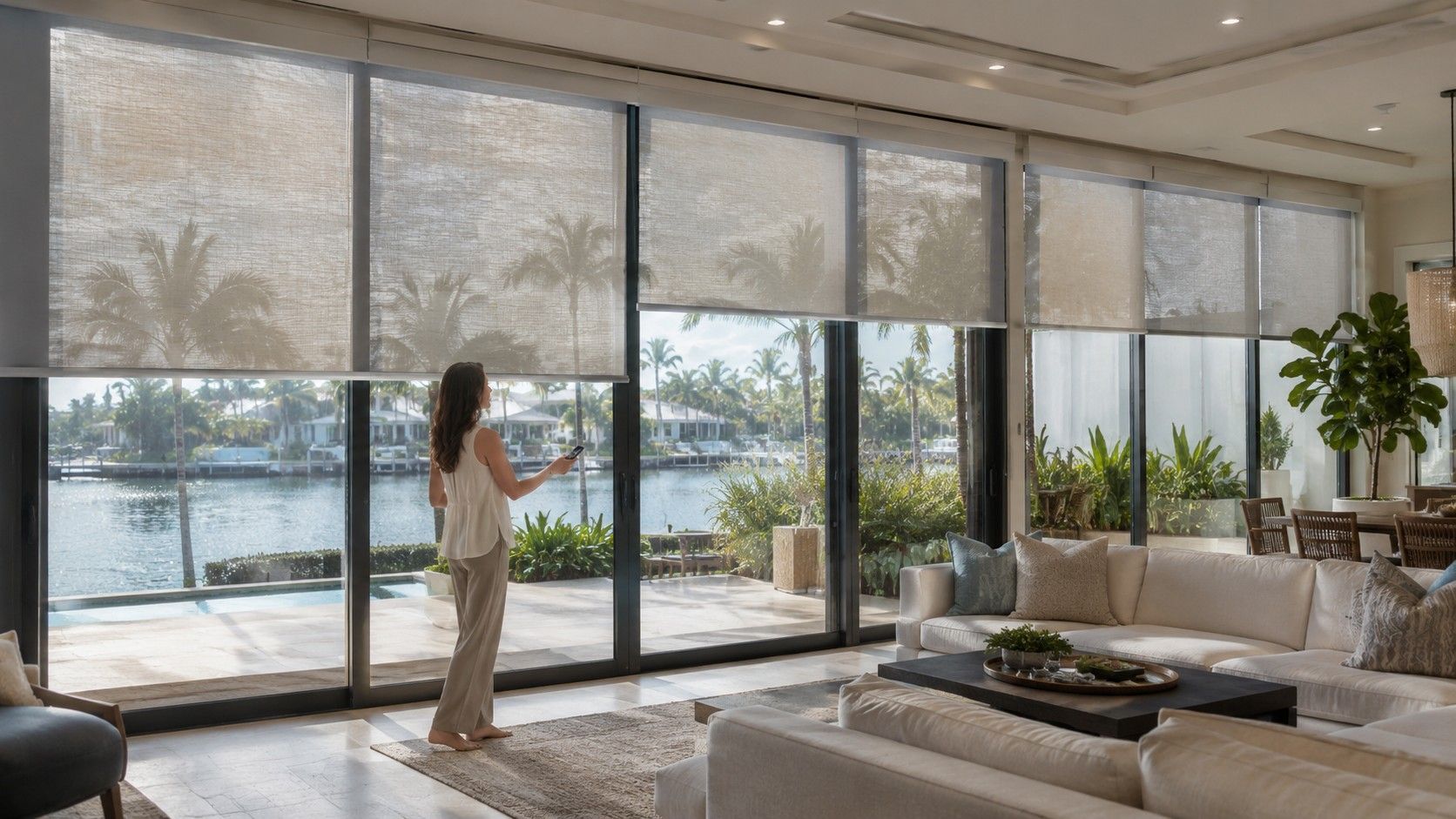
Solar shades are made from a technical open-weave fabric that blocks and reflects a large portion of the sun's heat and glare right at the window — while still letting you see through to the view. On a west-facing Delray Beach room that bakes every afternoon, this is the front line. Spec a tighter weave for more heat rejection, a more open one where you want to keep more of the view. Because they cut glare too, they also make screens and TVs watchable in bright rooms. See the full solar and roller shade options.
Cellular shades — insulate the window like a barrier
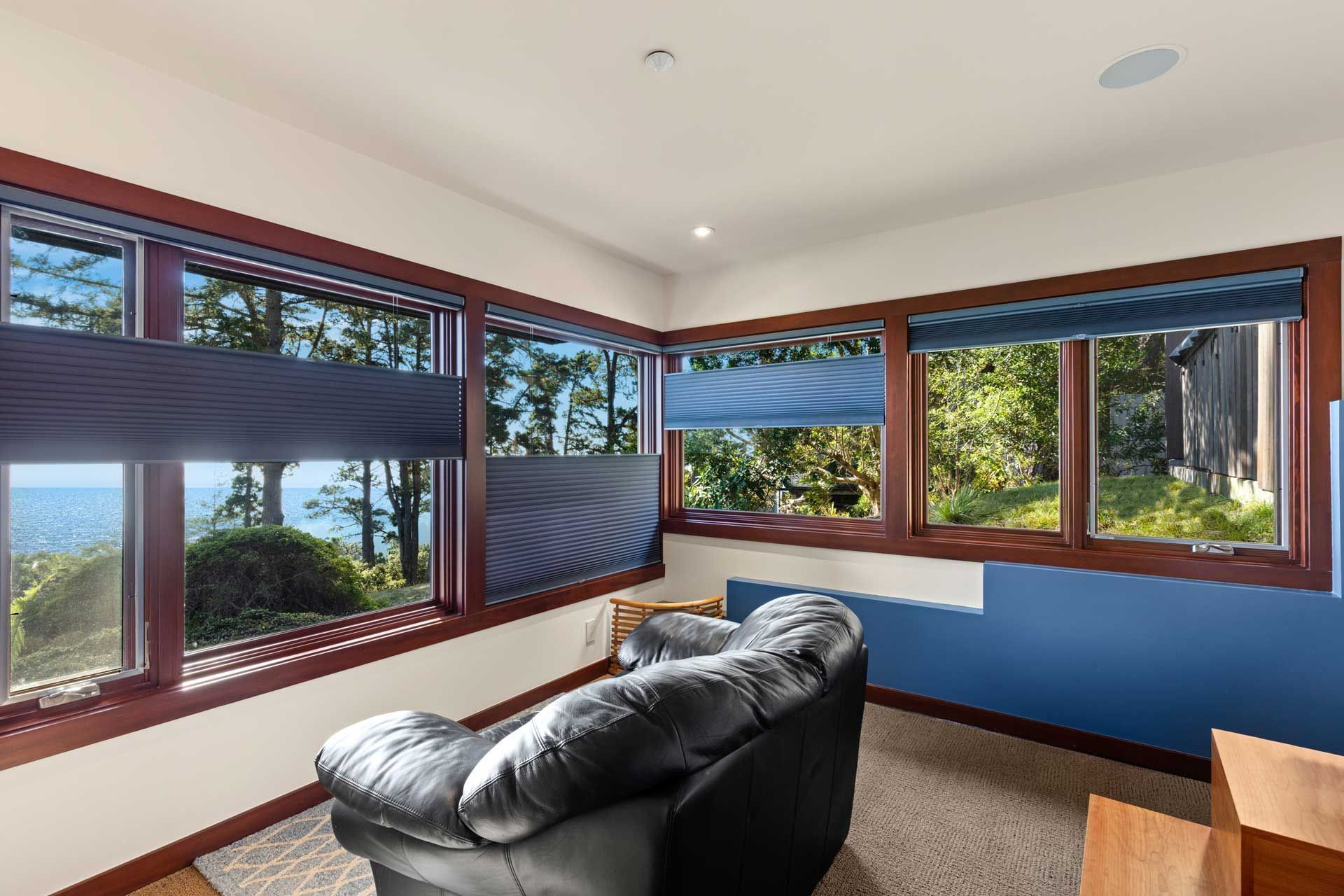
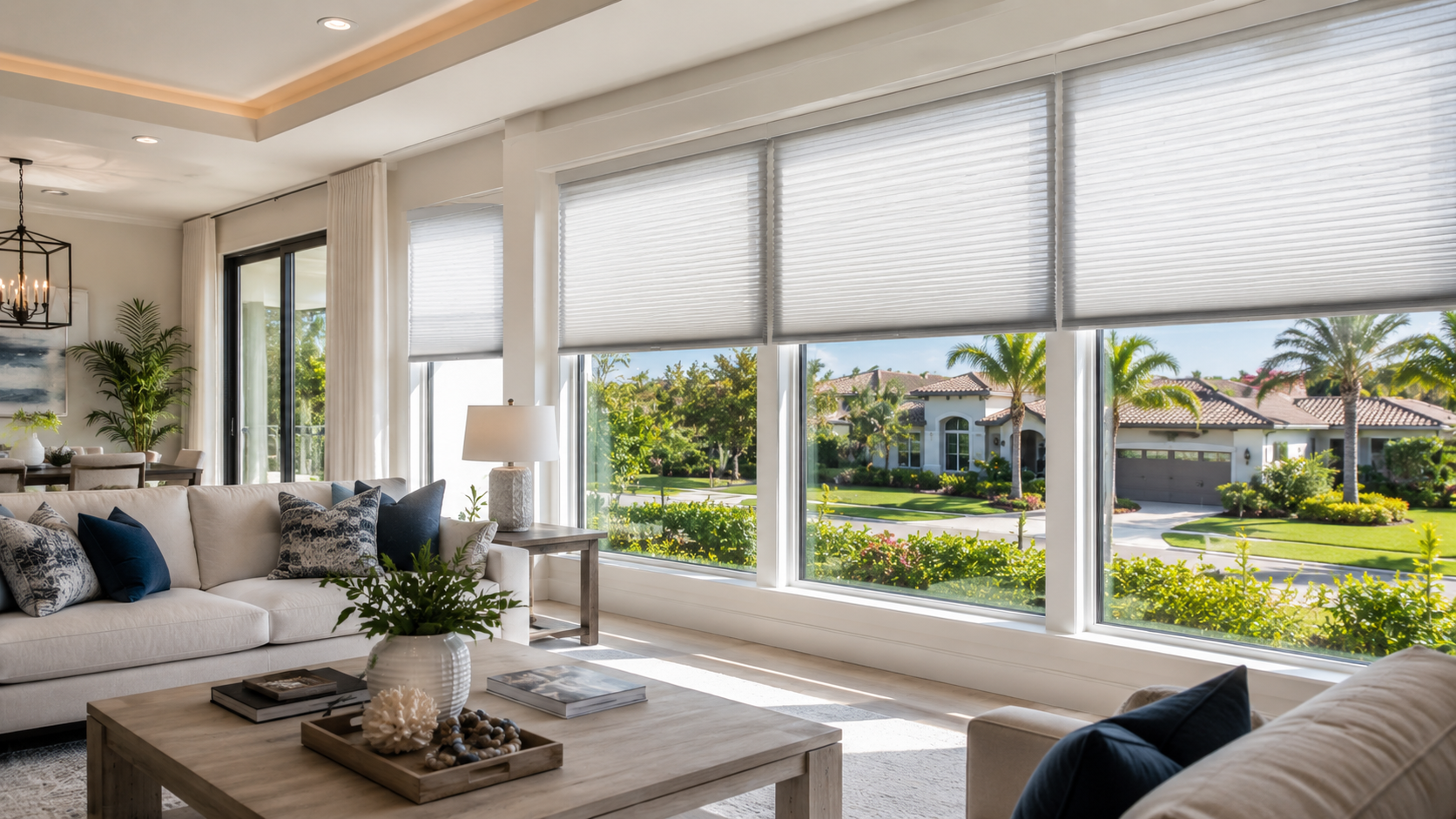
Cellular shades — also called honeycomb shades — are built with rows of air pockets that trap a layer of air between the room and the glass. That trapped air insulates the window, slowing heat from moving through. Where a solar shade reflects heat away, a cellular shade adds a buffer. In a bedroom or any room where you also want light control and a temperature buffer overnight, cellular is a strong pick. Browse the full shade lineup here.
How do these energy-saving shades compare?
Solar Shades
Reflect and block heat and glare at the glass while keeping the view. Best for west- and south-facing windows and big glass. The front-line heat blocker.
Cellular Shades
Honeycomb air pockets insulate the window and buffer the temperature. Best for bedrooms and rooms wanting light control plus an insulating layer.
Which windows should you shade first?
West-facing rooms
Top priority. They take the full afternoon sun — the peak of your daily heat gain. Solar shades here move the needle most.
South-facing glass
Sun exposure most of the day. Strong candidate for solar shades to cut steady heat load.
Sliding doors & glass walls
The largest single sheets of glass in the house. Big heat entry points — shade them to protect the whole room.
Bedrooms
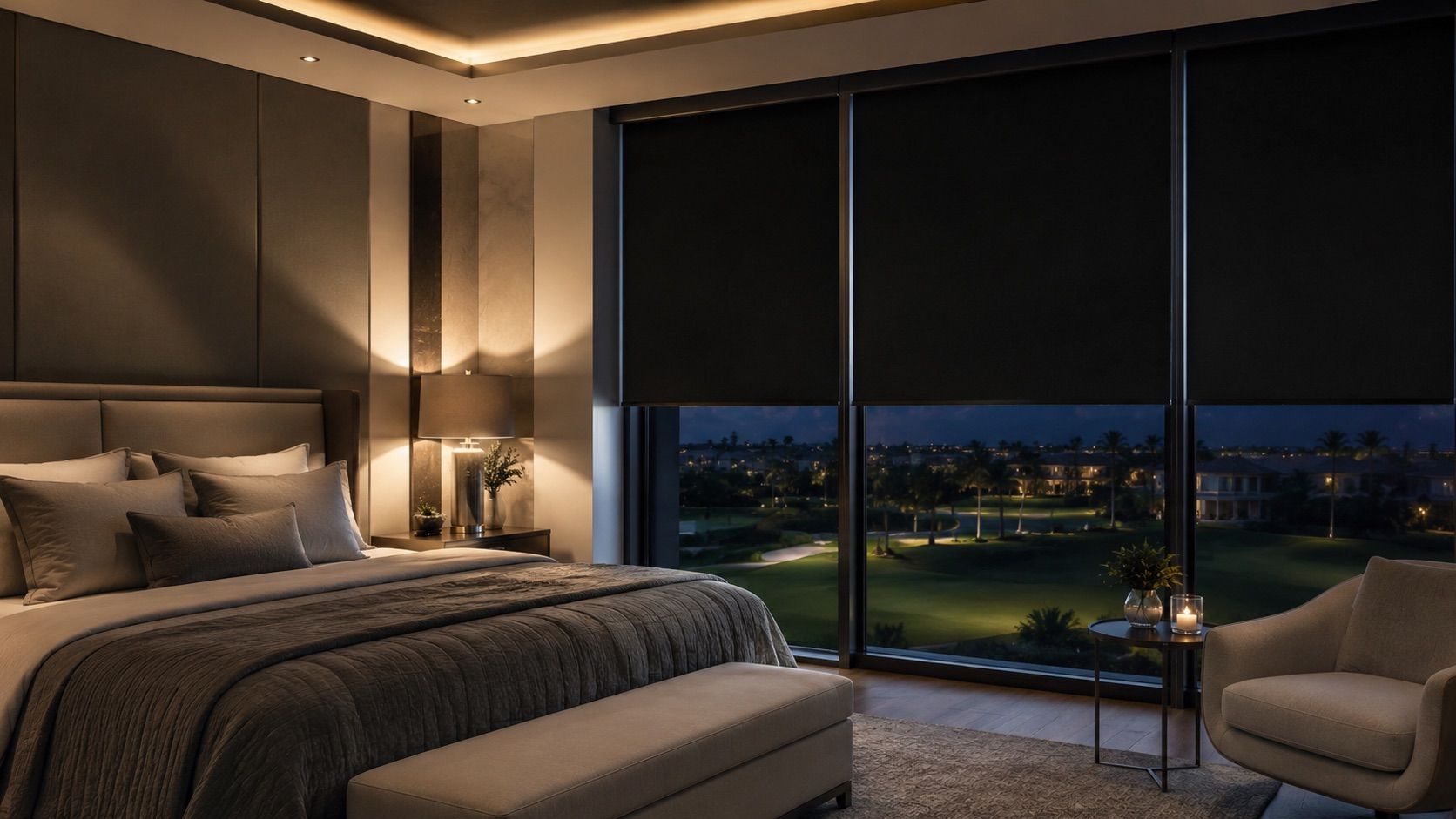
Cellular shades add an insulating buffer plus light control for cooler, darker sleeping.
The upgrade that makes it automatic
The catch with any shade is that it only helps when it's down. On the windows that matter most — the west-facing ones that overheat every single afternoon — motorized shades solve that. Set them on a schedule and they lower themselves at the hottest part of the day, blocking the heat before it builds, even when the house is empty. You stop the peak-heat gain every day without anyone lifting a finger. For a home that sits empty during work hours, this is where the comfort and the savings actually get locked in.
One honest note: window treatments reduce your cooling load — they're not a replacement for an efficient AC system, sealed ducts, or good glass. Anyone promising a specific dollar figure off your bill is guessing, because it depends on your windows, your exposure, and how you run your house. What's reliable is the direction: shade the hot windows and your AC works less. The right way to size it up is to have someone look at your actual rooms and sun exposure.
Find out which windows are costing you.
Get a free in-home consultation. We'll walk your home, check your sun exposure room by room, and show you exactly which treatments will take the most load off your AC — matched, measured, and installed to fit.
(561) 867-0484Frequently asked questions
Do window treatments really lower your AC bill in Florida?
Yes. A large share of unwanted heat in a South Florida home comes in through the windows as the sun hits the glass. The right treatments block or reflect that heat before it enters the room, so the AC doesn't have to work as hard or run as long. In a Delray Beach home with lots of glass or west-facing windows, the reduction in cooling load can be significant.
What window treatments are best for reducing heat and cooling costs?
Solar shades and cellular (honeycomb) shades. Solar shades block and reflect the sun's heat and glare at the glass while keeping the view. Cellular shades trap air in honeycomb pockets to insulate the window. Both reduce the heat load your AC has to fight.
How do cellular shades save energy?
Their honeycomb pockets trap a layer of air between the room and the window, and that trapped air acts as insulation, slowing heat transfer through the glass. In summer it helps keep the Florida heat out and softens the temperature swing near large windows, so the AC cycles less.
Which windows cause the most heat gain in a South Florida home?
West- and south-facing windows take the brunt of the sun and cause the most heat gain. Large sliding glass doors and walls of glass are major sources too. Shading these first delivers the biggest cut in cooling load.
Can motorized shades help lower energy costs?
Yes. Motorized shades can lower automatically during the hottest part of the afternoon, blocking heat before it builds even when no one is home. Automating the shades on west-facing windows stops the peak-heat gain every day without anyone remembering to close them.
Scott Smith
Scott is the owner of Surfside Blinds, a family-owned window treatment company serving Delray Beach, Boca Raton, Boynton Beach, and the surrounding Palm Beach County coast. He handles every consultation personally — from the first measure to the final install.