
Window Treatments for Snowbird & Seasonal Homes in Palm Beach County (UV, Security & Set-and-Forget)
A seasonal home has a different job than a full-time one. For half the year or more, it has to look after itself — fending off the sun, discouraging anyone who notices it sitting quiet, and doing both without you there to raise a shade. Most window treatments are chosen for how a room feels when you're in it. A snowbird home needs treatments chosen for what happens when you're not.
We install for a lot of seasonal owners across Boca Raton, Delray Beach and Boynton Beach, and the priorities are consistent: protect the interior from months of unshaded Florida sun, keep the home from broadcasting that it's empty, and make it all run without anyone lifting a finger. Here is how to get there.
For a home that sits empty part of the year, the strongest setup is motorized shades on a daily schedule in the main living areas and on large windows, solar or UV-filtering shades on your sun-exposed glass to protect furnishings, and plantation shutters where you want a permanent, low-maintenance barrier. The scheduling is the part that matters most — it's what lets the treatments keep working for UV protection and security while you're 1,400 miles away.
What This Guide Covers
- Why a seasonal home is a different problem
- UV: protecting an interior that sits in the sun all summer
- Security: not looking empty
- Set-and-forget: shades that run themselves
- Which treatments hold up best in a closed-up home
- A room-by-room plan for a seasonal home
- Installing while you're out of state
- Frequently asked questions
Why a Seasonal Home Is a Different Problem
In a full-time home, you're constantly making small adjustments — a shade down against the afternoon glare, blinds tilted for privacy at dinner, everything opened up in the morning. That daily human input is the system. It's doing the UV management and the it-looks-lived-in work without anyone thinking of it as a job.
Take the people out for five or six months and that entire system stops. Whatever position you left the shades in on the way to the airport is the position they hold until you're back. Leave them up, and the interior bakes daily and the rooms sit on full display. Leave them down, and the home looks shut and static — which reads as empty just as clearly. Neither default is doing you any favors.
This is why the seasonal-home conversation is less about fabric and color than about a plan that operates on its own. The right products matter, but the scheduling and automation are what turn a set of shades into something that actively protects the house.
UV: Protecting an Interior That Sits in the Sun All Summer
Fading comes from sustained exposure to UV, visible light and heat — and a seasonal home left open takes that exposure on the same floors, rugs, art and upholstery every single day of the off-season. It's the most concentrated fading scenario there is, because nobody is there to interrupt it.
Two product types do the most work here:
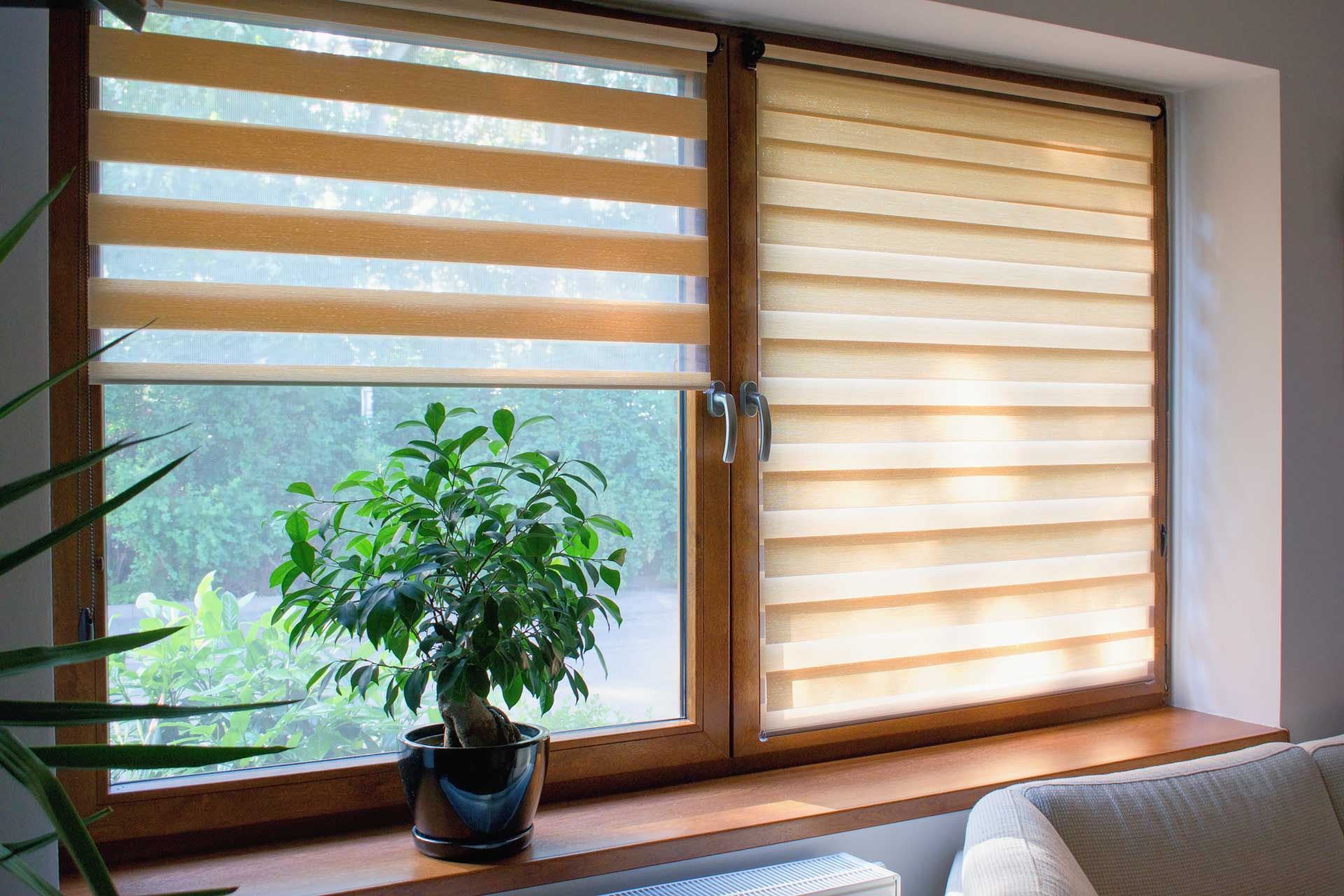
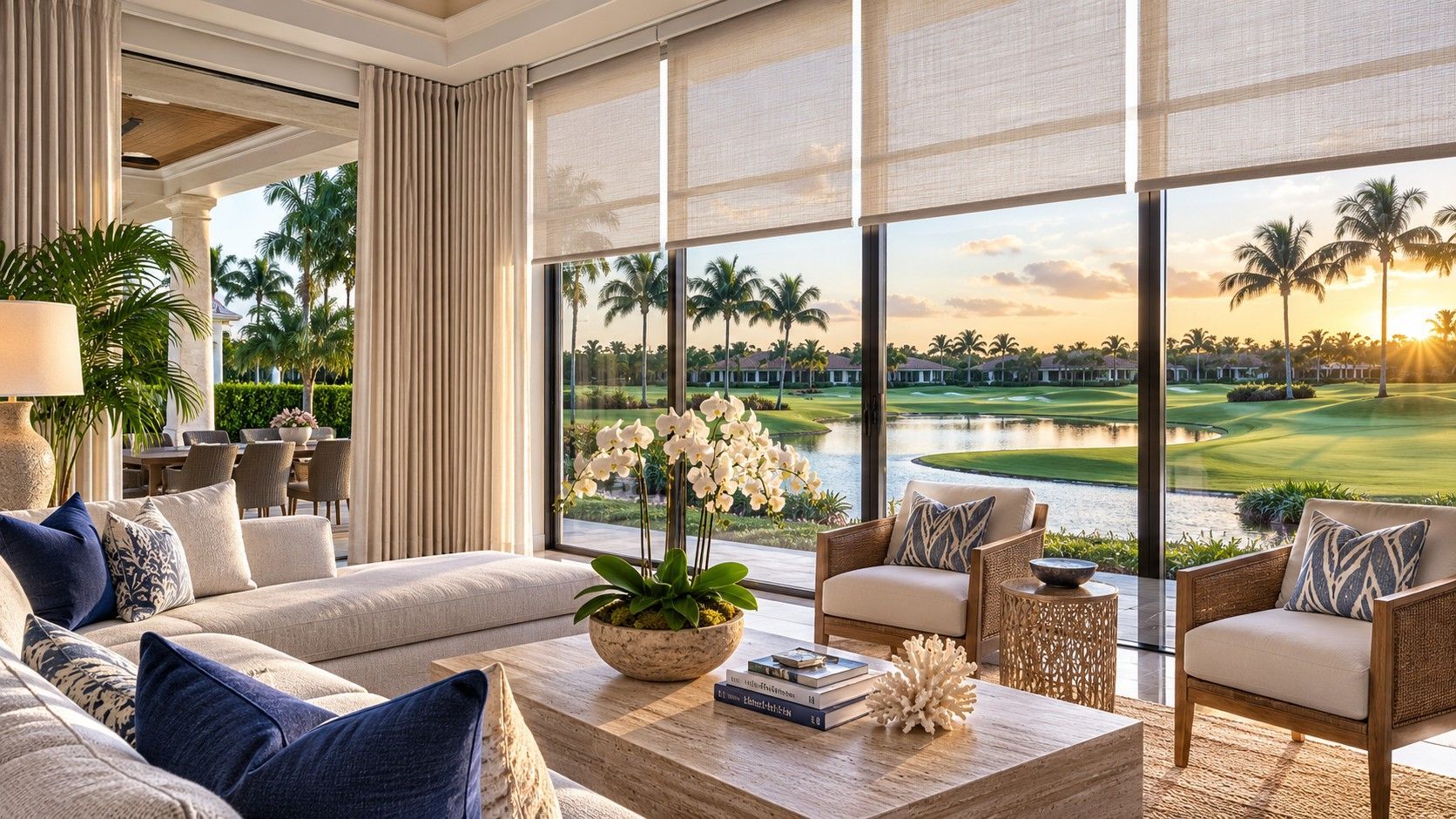
- Solar shades. Woven screen fabrics that block a significant portion of incoming sunlight while lowered. On a seasonal home, a tighter openness (3% or 5%) gives strong protection, and because you're not there to enjoy the view, you can lean toward maximum blockage without compromise.
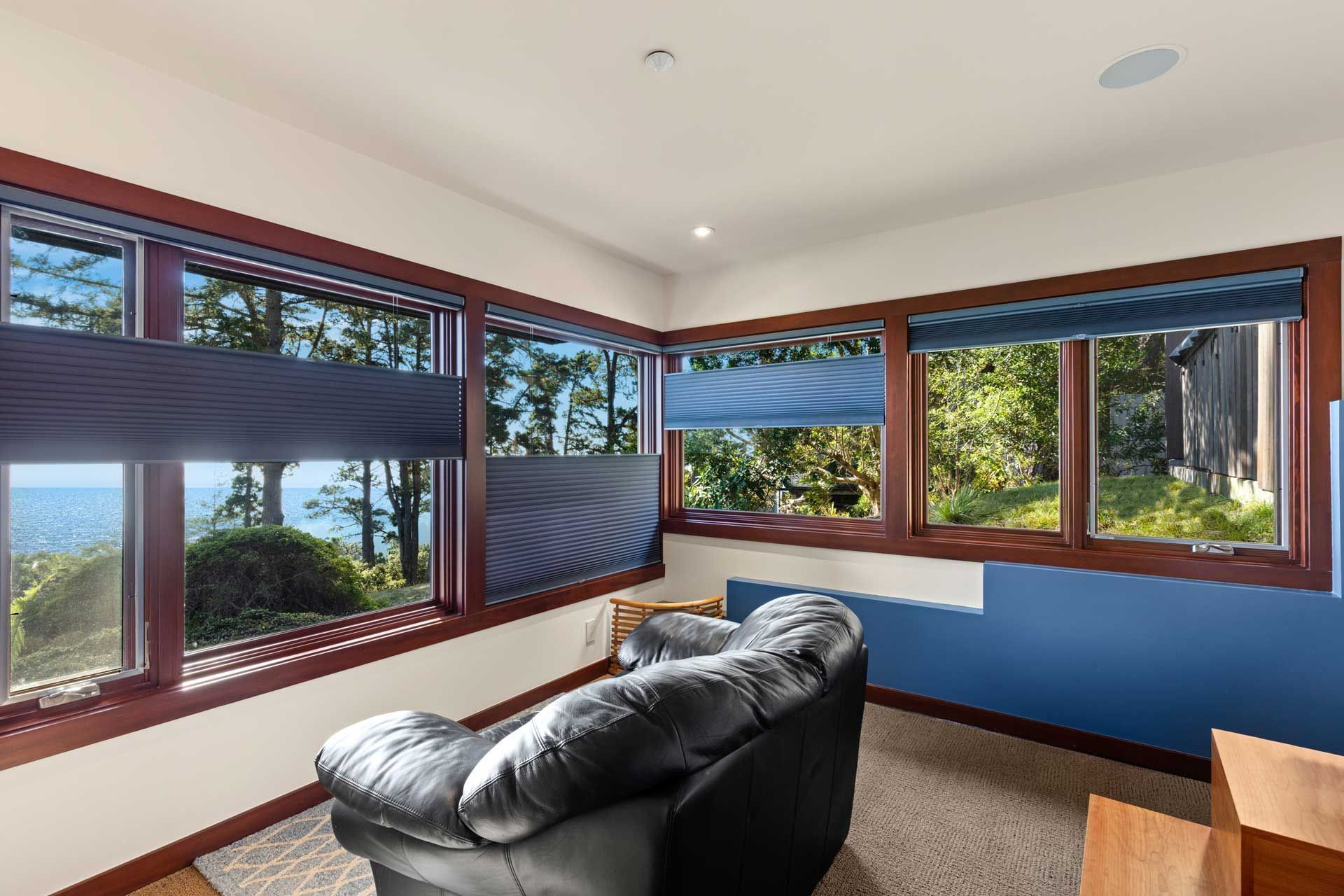
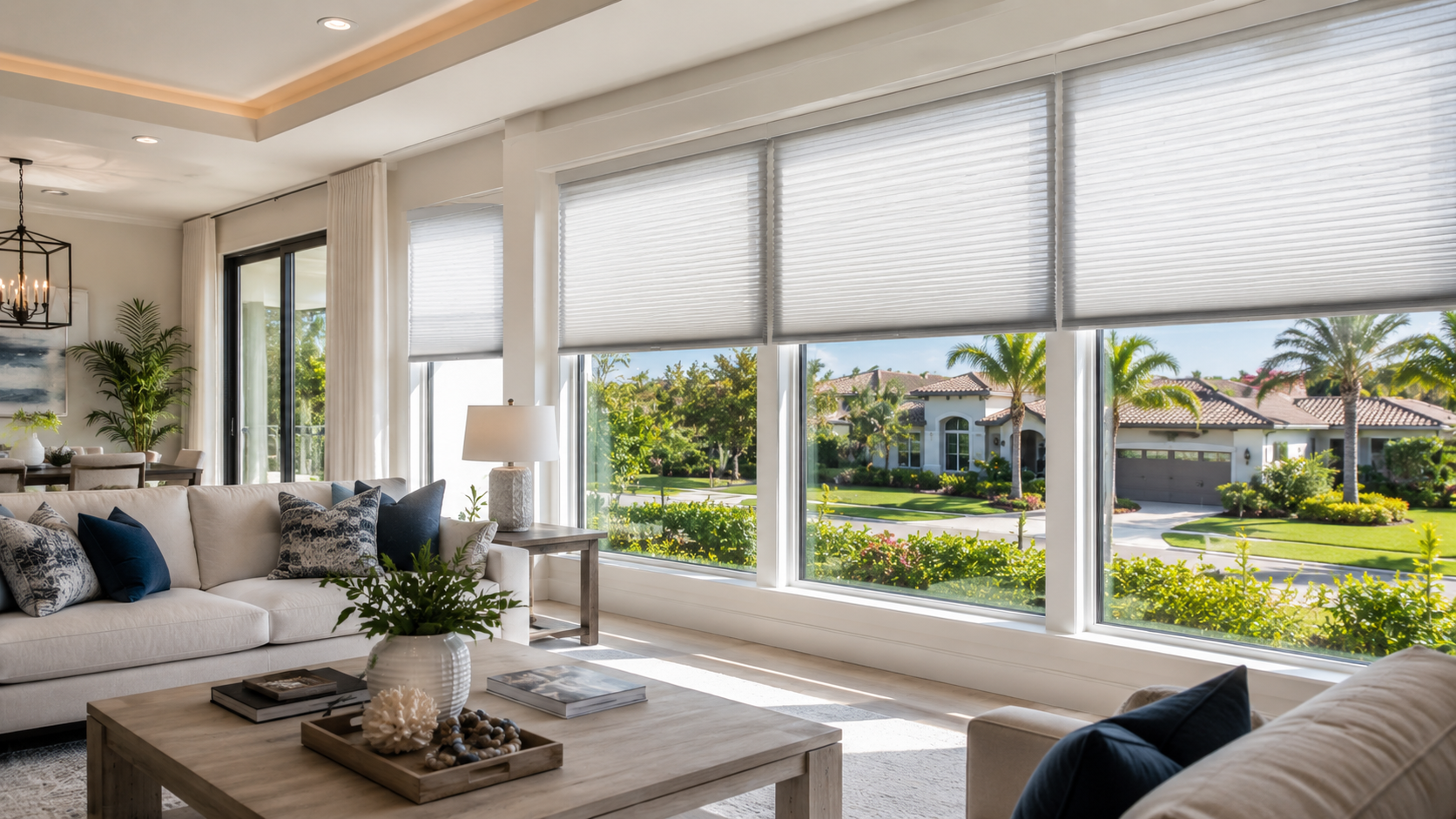
- UV-filtering roller and cellular shades. Solid fabrics that stop even more direct light when down. Cellular shades add an insulating layer, which also helps moderate the interior temperature of a closed-up house.
The honest framing: no interior treatment eliminates UV entirely, but lowered solar or UV-filtering shades can meaningfully reduce the daily exposure that causes fading. Paired with a schedule that keeps them down through peak sun, they protect the interior every day without you present — which is the whole point.
Protect Your Home Before the Next Season Away
Surfside Blinds designs seasonal-home setups that run on their own — UV protection, scheduled shades, and low-maintenance treatments built for a closed-up Florida house. Free in-home consultation, expert measuring, and professional installation across Palm Beach County.
Book a Free In-Home Consultation or call (561) 867-0484Security: Not Looking Empty
An empty home rarely gets targeted because someone knows it's empty — it gets targeted because it looks empty. Window treatments influence that impression more than people expect, in two distinct ways.
Movement that suggests someone's home
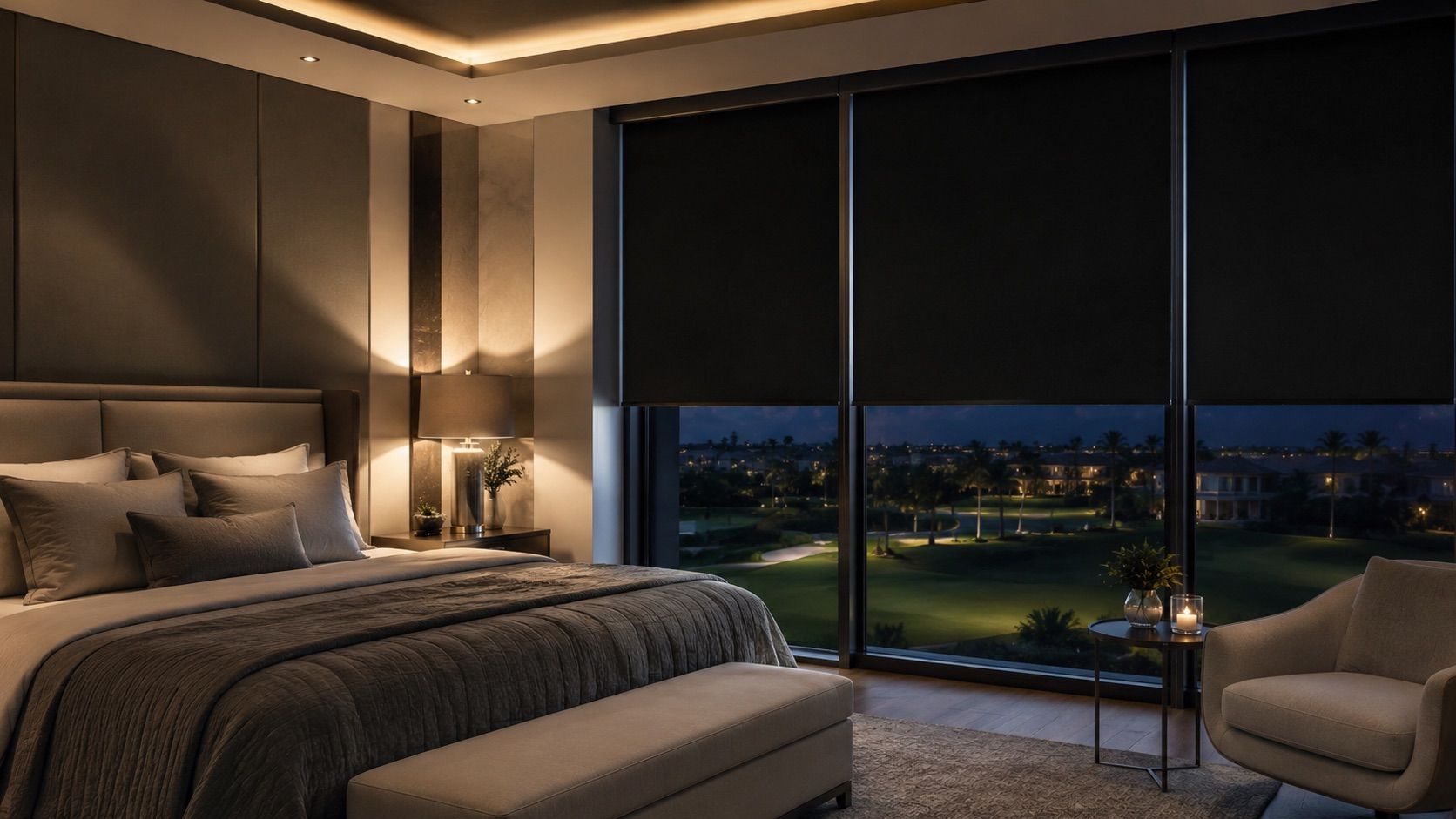
Shades that never change position for months tell a clear story to anyone paying attention. Motorized shades on a varied daily schedule — up in the morning, down in the afternoon, adjusting room to room — recreate the ordinary rhythm of an occupied house. It's the same logic as putting lamps on timers, applied to the largest openings in the home.
Keeping the inside out of view
A seasonal home is often the one with the nicest untouched furnishings, sitting in plain sight through uncovered glass. Treatments that block the view inside — lowered shades, closed plantation shutter louvers — keep what's in the home from being catalogued from the street or the yard.
Window treatments are one layer of security, not a substitute for an alarm, cameras or a monitoring service. But for a home that sits empty, they're a low-effort layer that works around the clock — and combined with automation, they're one of the few security measures that also earns its keep on UV protection and comfort.
Set-and-Forget: Shades That Run Themselves
This is the piece that ties the seasonal home together, and it's why motorization matters so much more here than in a full-time house. In a home you live in, motorized shades are a convenience. In a home you leave, they're the mechanism that keeps every other benefit running while you're gone.
Scheduling
Motorized shades can be programmed to raise and lower at set times each day. For a seasonal home, that single feature delivers three things at once: UV protection during peak sun, the lived-in appearance that supports security, and interior temperature moderation in a closed-up house — all without anyone present.
Remote adjustment
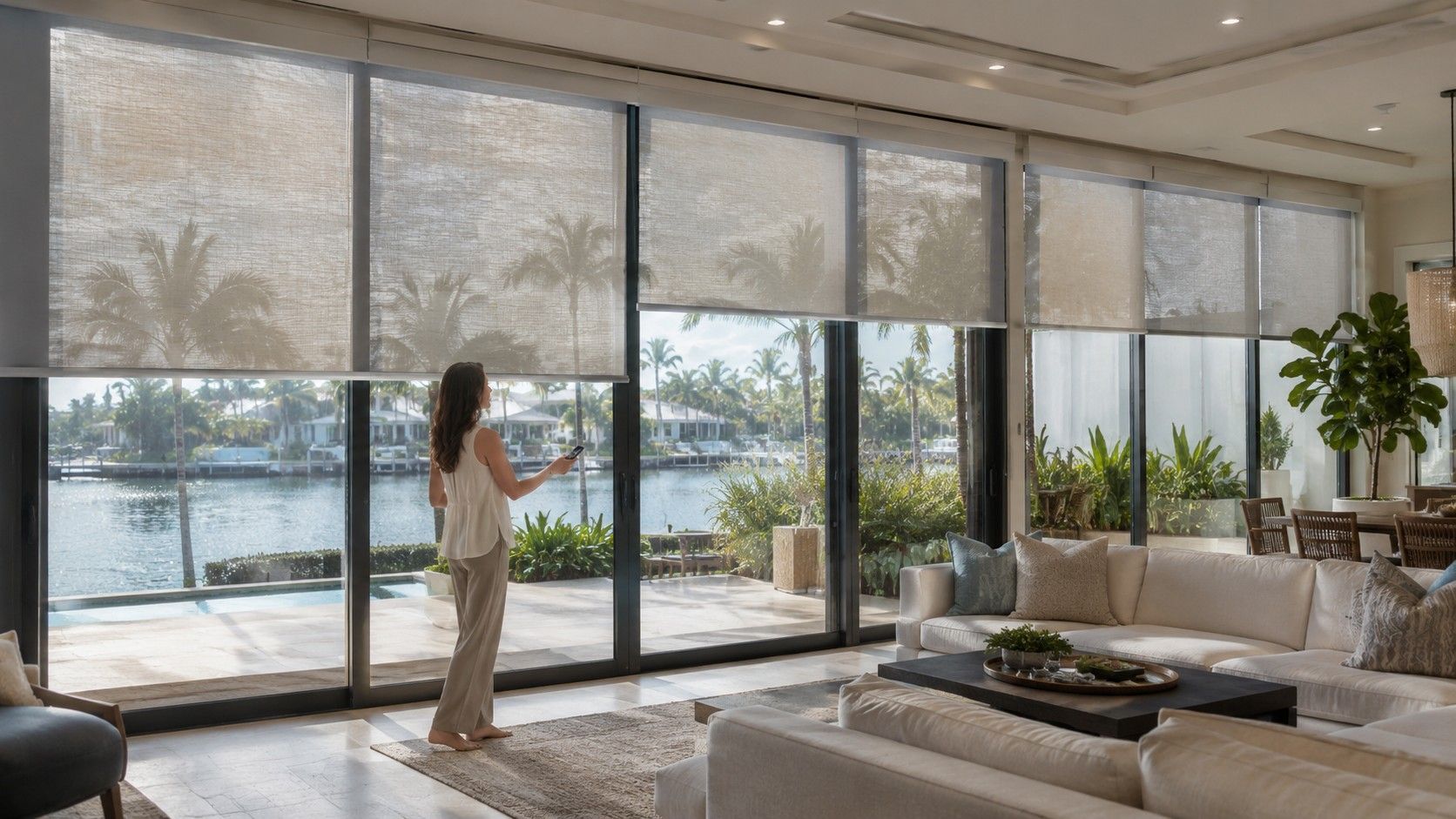
Many systems let you change the schedule or move individual shades from an app, wherever you are. If a caretaker calls, a cleaner is coming, or you simply want to shift the pattern, you can do it from up north. It also means you arrive to a home that's already been managing its own light for months, rather than one you have to reset room by room.
Reliability in an empty house
Because there are no cords being pulled and no daily manual handling, quality motorized hardware is built to cycle on a schedule for long stretches with minimal wear. That reliability is exactly what a set-and-forget home depends on.
We keep the automation detail brief here on purpose — the focus of this guide is the seasonal-home strategy. If you want the full picture of how motorized and app-controlled systems work and what they integrate with, we cover that separately.
Which Treatments Hold Up Best in a Closed-Up Home
A house shut for the summer runs humid, still and warm. Some treatments handle that environment far better than others, and for a home you're not maintaining week to week, durability and low upkeep move to the top of the list.
| Treatment | Seasonal-home strengths | Best used for |
|---|---|---|
| Motorized solar / roller shades | Run on a schedule; UV protection; no cords to wear; lived-in movement | Living areas, large windows, sun-exposed glass |
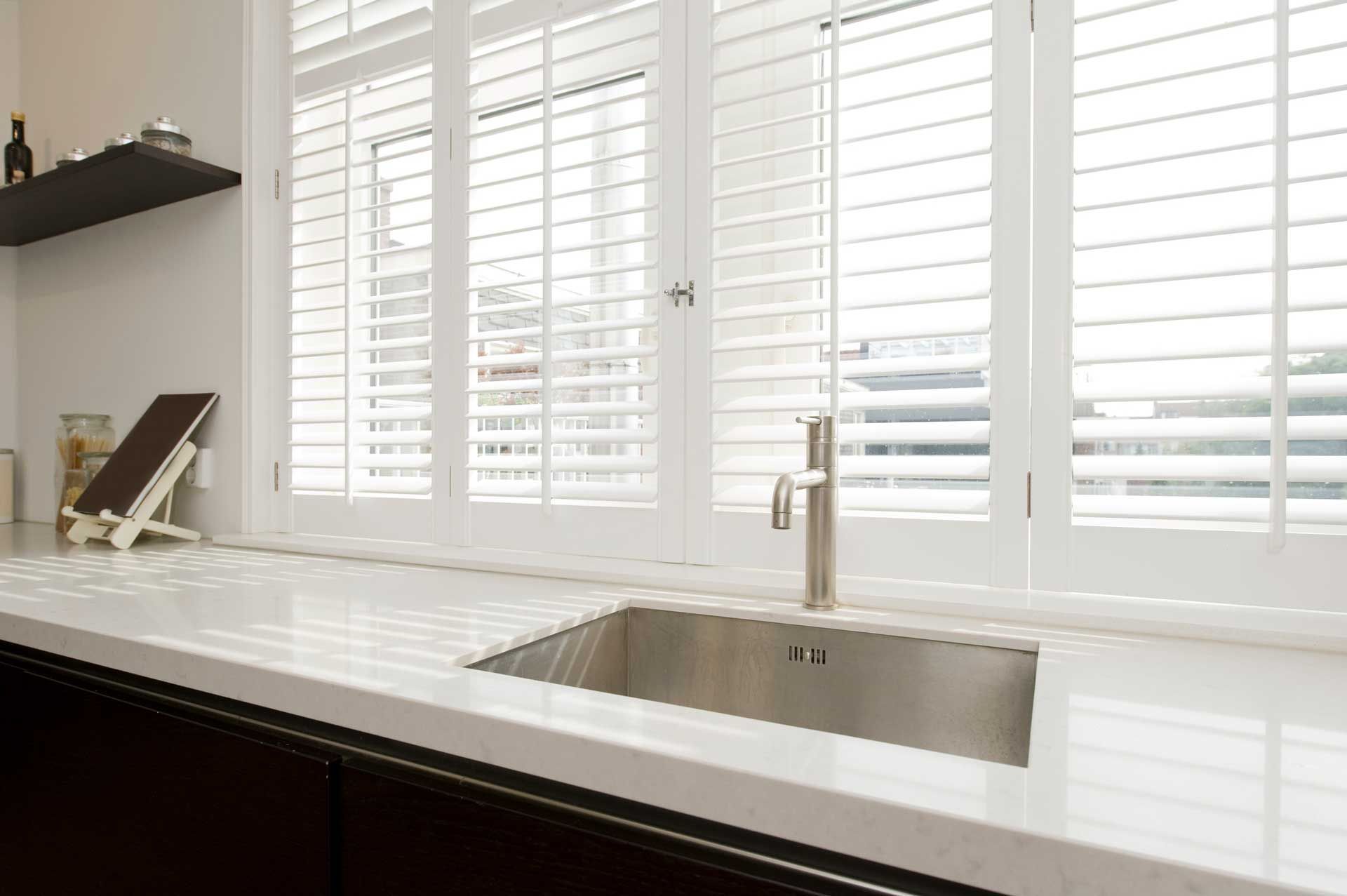
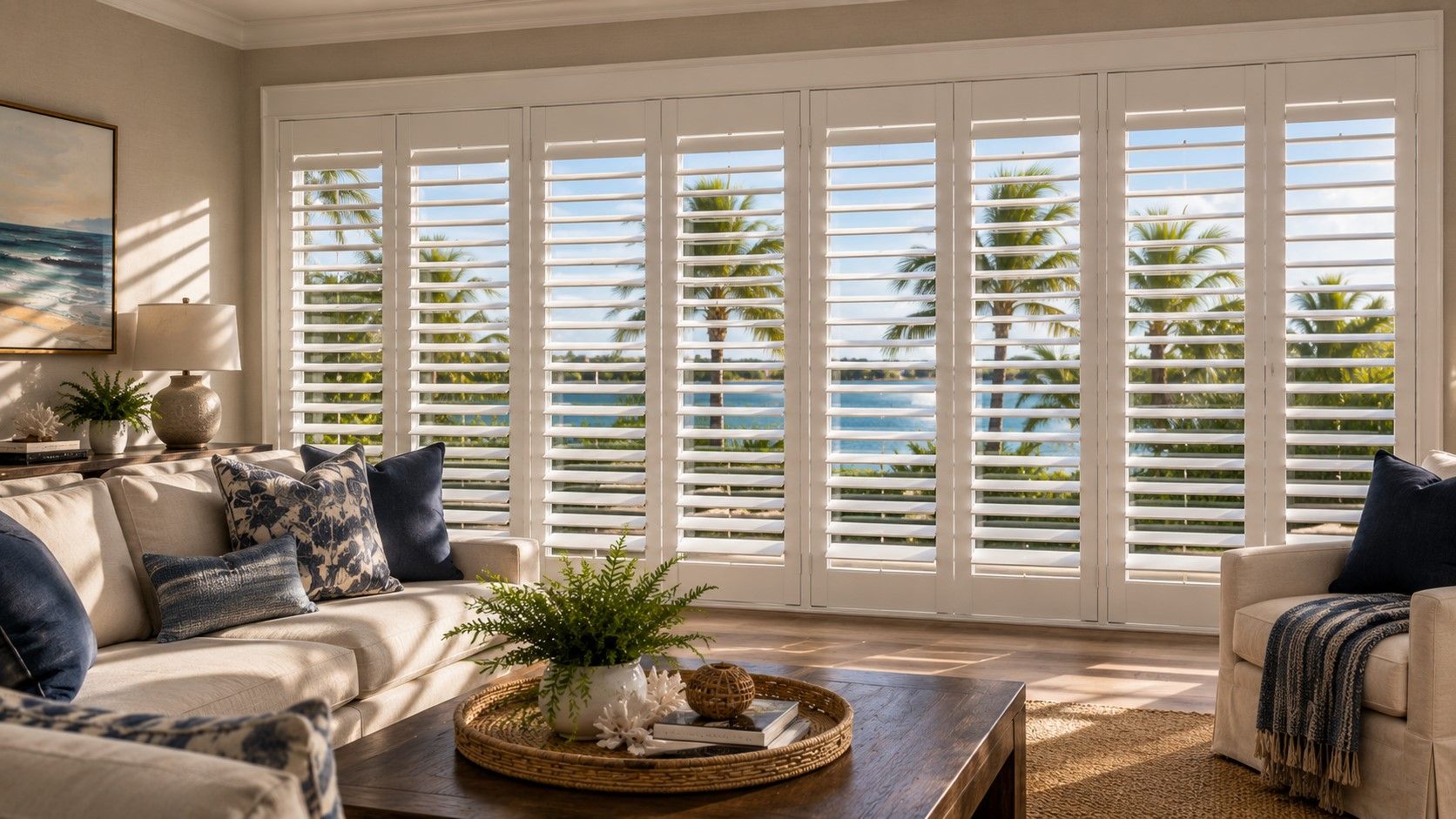
| Composite / vinyl plantation shutters | No fabric to hold mildew; tolerate humidity; wipe clean; permanent privacy barrier | Bedrooms, bathrooms, front-facing rooms |
| Cellular (honeycomb) shades | Insulating layer moderates a closed-up interior; strong light block | Bedrooms and rooms where temperature matters most |
| Real wood blinds / shutters | Beautiful, but more sensitive to sustained humidity and heat | Controlled interior rooms only — not wet or full-sun areas |
The pattern: for the parts of the home doing the hardest seasonal work, lean toward motorized shades and composite or vinyl shutters. Save natural wood for the controlled interior rooms where the climate is gentler.
A Room-by-Room Plan for a Seasonal Home
- Great room and main living areas. Motorized solar shades on a schedule — the workhorses that handle UV, security movement and the large glass that dominates most Palm Beach County homes.
- Bedrooms. Plantation shutters or cellular shades. Closed shutters give a permanent privacy barrier with nothing to maintain; cellular shades add insulation for a closed-up room.
- Bathrooms and laundry. Vinyl plantation shutters. They shrug off the humidity of a shut house and never hold mildew.
- Front-facing and street-visible rooms. Whatever the product, prioritize blocking the view inside — this is where "looks lived-in, shows nothing" earns its keep.
- Waterfront and coastal-exposed glass. In Highland Beach, Gulf Stream and Ocean Ridge homes, factor in salt air on hardware — quality components matter more when no one's there to notice early wear.
Installing While You're Out of State
The logistics are the part seasonal owners worry about most, and they're the most solvable. As a local, family-owned company based in Delray Beach, we regularly coordinate measuring and installation with property managers, caretakers and seasonal owners who aren't in Florida when the work happens.
A few things that make it smooth:
Before you leave for the season, or before your next arrival:
- Schedule the free in-home consultation for a window when you're here, and we'll handle measuring and product selection in one visit.
- If you're already up north, we can coordinate access with your property manager or caretaker for both measuring and installation.
- For motorized systems, we set the initial schedule with you so the home is protected the day it's programmed — and you can adjust remotely from there.
- You deal directly with the owner throughout, not a rotating sales team, so the person who quoted the job is the person who sees it through.
Where we work. Surfside Blinds is a licensed and insured, family-owned company based in Delray Beach, serving seasonal and full-time homeowners throughout Boca Raton, Delray Beach, Boynton Beach, Highland Beach, Gulf Stream, Ocean Ridge, Lake Worth Beach and the surrounding Palm Beach County communities — single-family homes, condos and waterfront properties.
Frequently Asked Questions
What are the best window treatments for a seasonal home in Palm Beach County?
Motorized shades on a schedule for the main living areas and large windows, solar or UV-filtering shades on sun-exposed glass to protect interiors, and plantation shutters where you want a permanent, low-maintenance barrier. The scheduling matters most, because it keeps the treatments working for UV protection and security while you're away.
Can motorized shades run on a schedule while I'm out of state?
Yes. They can be programmed to raise and lower at set times daily, which protects furnishings from peak sun and creates the appearance of an occupied home. Many systems also adjust remotely through an app, so you can change the pattern from up north without being in Florida.
Do window treatments actually help protect a vacant home from break-ins?
They help in two ways: shades that move on a schedule signal that a home is lived in, and treatments that block the view inside keep valuables out of sight. They're one layer of security rather than a replacement for an alarm or cameras, but for a seasonal home they're a meaningful, low-effort layer.
Will the Florida sun fade my furniture while I'm gone for the summer?
It can. Months of direct, unshaded sun on the same floors, rugs and upholstery is exactly what causes fading, and a home left with shades up all summer takes the full exposure daily. Solar and UV-filtering shades block a significant portion of that light when lowered, and a schedule means they protect the interior every day with no one there.
What window treatments need the least maintenance in a home that sits empty?
Plantation shutters and solar or roller shades. Shutters have no fabric to attract mildew and wipe clean; composite and vinyl shutters in particular tolerate a closed-up, humid house well. Motorized shades reduce wear because there are no cords being handled, and quality hardware is built to cycle daily on a schedule.
Should I leave my shades up or down when I leave for the season?
Neither extreme is ideal. Up all season, interiors take full sun and the home looks empty; down the whole time, it looks equally unoccupied and static. The best approach is motorized shades on a varied daily schedule — protecting interiors during peak sun while creating natural-looking movement.
Can Surfside Blinds install while I'm out of state and coordinate with my property manager?
Yes. As a local, family-owned company in Delray Beach, we regularly coordinate measuring and installation with property managers, caretakers and seasonal owners. We offer free in-home consultations across Palm Beach County and work around your schedule. Call (561) 867-0484 to arrange it.
Let Your Home Look After Itself Next Season
Surfside Blinds is family-owned and based in Delray Beach — you deal directly with the owner, not a rotating sales team. Free in-home consultation, real product samples, expert measuring, and professional installation across Palm Beach County. Licensed, insured, and rated five stars by 40+ local homeowners.
Book Your Free In-Home Consultation or call (561) 867-0484