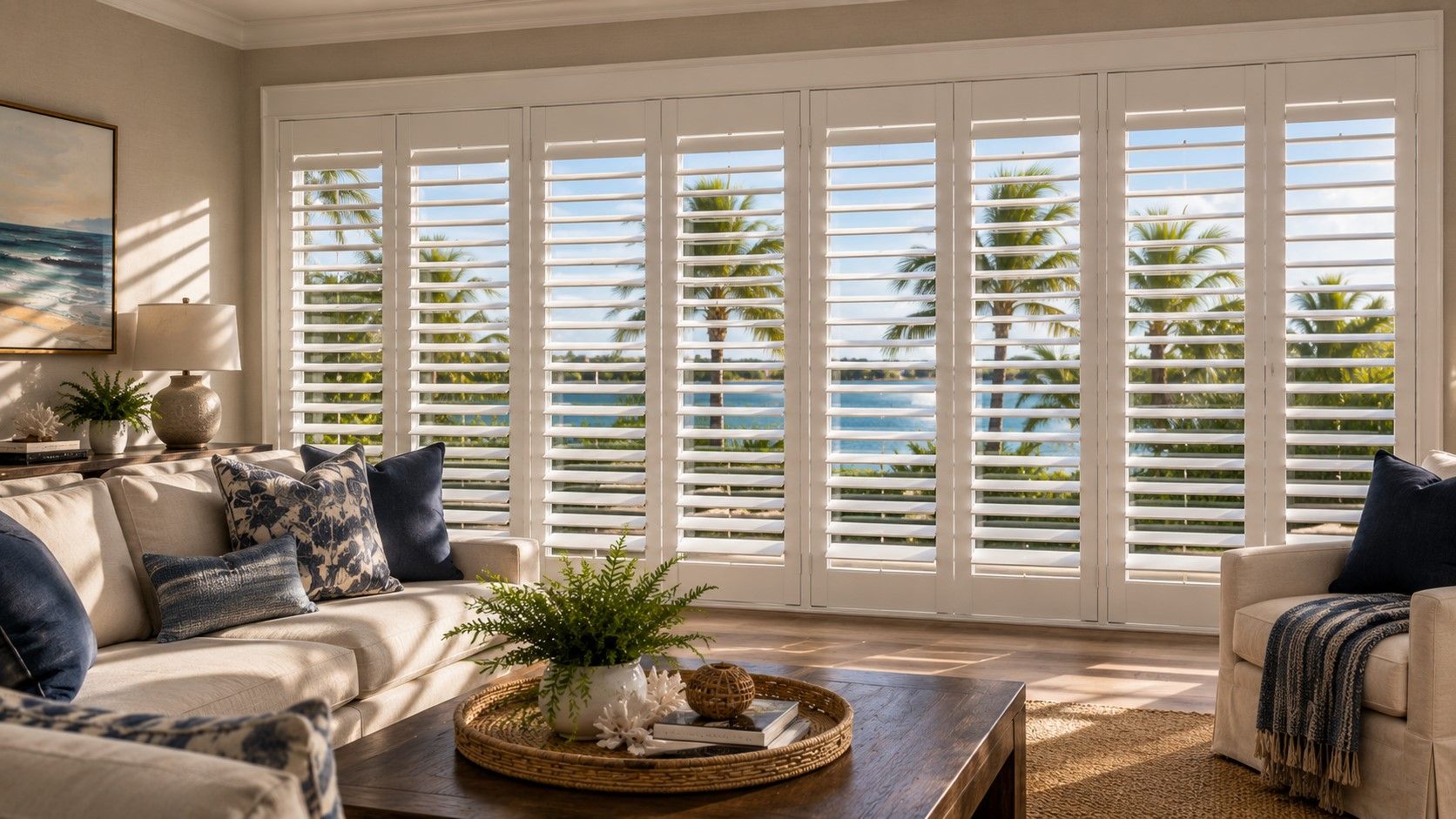
Plantation Shutters in South Florida: What Boca Raton, Delray Beach & Boynton Beach Homeowners Should Know Before Buying
Plantation shutters are the highest-commitment window treatment you can buy. A shade that disappoints you gets swapped out in an afternoon. Shutters are cut to your opening within a sixteenth of an inch, screwed to the wall, and they stay with the house — usually long after you sell it.
That permanence is why they are worth doing well, and why the decisions made before the order matter more than with anything else we install. Here is what we tell homeowners across Boca Raton, Delray Beach and Boynton Beach before they commit, including the parts most showrooms leave out.
In South Florida, material choice is the decision that matters most. Composite plantation shutters are the best all-around fit for the majority of homes here — strong moisture resistance in a clean painted finish. Vinyl or PolySatin-style shutters are the right call for bathrooms, laundry rooms, pool baths and homes directly on the water. Real hardwood is the choice when you want stained tones or the thinnest frame profiles, and it belongs in controlled interior rooms, not wet areas or glass that takes hours of direct afternoon sun.
What This Guide Covers
- Why shutters behave differently in South Florida
- The material decision: wood, composite and vinyl
- Side-by-side comparison
- The details that separate a good install from a bad one
- Where shutters shine — and where they don't
- What to ask during your consultation
- Mistakes that cost homeowners money
- Resale perception in Palm Beach County
- Frequently asked questions
Why Shutters Behave Differently in South Florida
A plantation shutter is a moving mechanical assembly held in a frame. Panels, stiles, louvers, tilt mechanism, hinges — every part responds to the air around it. In a dry climate, very little is happening to that assembly. In Palm Beach County, quite a lot is.
Humidity here is constant, not seasonal
Homes in this market run humid year-round, and interior conditions swing further than people expect. A house closed up with the AC running holds one moisture level; the same house with the sliders open to the pool deck holds another. Materials that absorb moisture expand and contract through that cycle, and over enough cycles, panels cut to a tight fit start to bind, stick or hang unevenly. This is the entire reason interior shutters for Florida humidity is a real product category rather than marketing language.
Salt air reaches further inland than people think
In Highland Beach, Gulf Stream, Ocean Ridge and the eastern stretches of Delray Beach and Boca Raton, salt air moves through open doors daily. It is hard on finishes and harder on hardware. On coastal homes, hinges and tilt mechanisms are what show wear first — not the panels. That makes hardware quality worth asking about by name rather than assuming it is bundled into the word "premium."
Sun exposure is the quiet variable
West and southwest glass takes hours of low-angle direct sun, and sustained heat on a painted or stained surface is a different loading than the same shutter on a north-facing window. It is a strong argument for composite or vinyl on your sunniest elevations even if you prefer wood elsewhere in the house.
See the Materials Side by Side, in Your Own Light
Composite and hardwood look different in a showroom than they do on your wall at four in the afternoon. Surfside Blinds brings real samples to your home, measures every opening, and gives you a straight recommendation room by room.
Book a Free In-Home Consultation or call (561) 867-0484The Material Decision: Wood, Composite and Vinyl
Nearly every complaint we hear about someone else's shutters traces back to the wrong material in the wrong room. Here is the honest picture on each.
Real wood (typically basswood)
Hardwood is the traditional choice and still the most refined. Because wood is strong for its weight, it allows the widest panels and the narrowest stiles — less framing across your glass, more view. It is also the only route to a stained finish rather than paint, which matters in homes with wood floors, coffered ceilings or a warmer design language.
The tradeoff is sensitivity. Wood responds to moisture and sustained heat, and in this climate that means it belongs in controlled interior spaces: bedrooms, dining rooms, studies, formal living areas away from the wettest and sunniest exposures. Putting hardwood in a pool bath is fighting the climate on purpose.
Composite plantation shutters
Composite uses an engineered wood core wrapped in a durable finish. It is the workhorse of the South Florida market for good reason: strong resistance to moisture, swelling and peeling, a consistent factory painted finish, and a look that reads as painted wood at any normal viewing distance.
The tradeoff is weight and profile. Composite is heavier than hardwood, so maximum panel widths are narrower — a wide opening may need an extra panel or a divider post. Finishes are generally limited to whites and off-whites, which is rarely an obstacle here, since most Palm Beach County interiors are asking for white on white anyway.
Vinyl and PolySatin-style shutters
These are solid polymer, often with internal aluminum reinforcement. They are the most moisture-resistant option available and effectively indifferent to the conditions that damage wood. If you have wondered what belongs in a bathroom, laundry room, pool bath, or a window that catches direct spray, this is it.
The tradeoffs are aesthetic and structural. Colors are limited to white and off-white, the material can read slightly less refined up close than a finely finished wood, and wide panels need reinforcement to stay rigid. In the right rooms none of that registers. In a formal living room, it might.
You do not have to choose one material for the whole house. Mixing is normal and usually smart — composite through the main living areas, vinyl in the wet rooms, hardwood in a study where you want stain. Holding the paint color and louver size consistent across materials keeps it visually seamless.
Side-by-Side Comparison
| Hardwood | Composite | Vinyl / PolySatin-style | |
|---|---|---|---|
| Moisture resistance | Lowest — needs a dry, controlled room | Strong | Highest |
| Finish options | Paints and stains, widest range | Painted whites and off-whites | Whites and off-whites only |
| Max panel width | Widest — fewer panels, more view | Moderate | Narrower unless reinforced |
| Stile / frame profile | Thinnest possible | Moderate | Thickest |
| Best rooms | Bedrooms, studies, formal rooms | Living areas, kitchens, most of the house | Bathrooms, laundry, pool baths, coastal exposure |
| Maintenance | Dusting plus care of the finish | Wipe clean | Wipe clean, most forgiving |
The Details That Separate a Good Install From a Bad One
Two shutters can be the same material and the same color and still look completely different on the wall. These specifications decide which one you end up with.
Louver size
The 3.5 inch louver is the default and fits most windows. The 4.5 inch louver means fewer louvers per panel, a cleaner outward view and a more contemporary feel — excellent on the large windows and open plans common in newer Boca Raton construction. The 2.5 inch louver suits small windows and older Delray Beach cottages where a larger louver would overwhelm the opening. It is a proportion question, and proportion is genuinely hard to judge from a catalog.
Mounting depth — especially on impact windows
This is the most common measuring complication in South Florida homes. Many impact and hurricane-rated windows sit in shallower or differently shaped recesses than standard windows, and there may not be enough depth for a clean inside mount. The fixes are straightforward — an outside mount on a frame, a shallower frame profile, a build-out — but they have to be identified before the order, not on installation day.
Frame style
The frame is what the shutter lives in, and it decides how finished the result looks. An L-frame is the common inside-mount option. A Z-frame laps the edge of the opening and hides imperfect drywall returns. A decorative frame gives a heavier, trimmed appearance. If your openings have uneven returns or old holes from previous treatments — very common in older homes — the right frame quietly solves it.
Tilt mechanism
A visible tilt rod down the center of the panel is the classic look. A hidden tilt moves the mechanism into the stile for a clean, uninterrupted louver face — the modern choice, and what most of our Boca Raton clients now specify. A split tilt lets the top and bottom of one panel operate independently, which is genuinely useful in bedrooms and street-facing rooms: privacy below, daylight above.
Divider rails and panel layout
A divider rail is a horizontal bar splitting a tall panel into independently operating sections — structural rigidity plus the split-tilt benefit. On wide openings, panel count and swing direction matter: too few panels produces heavy, sagging doors; too many produces a wall of stiles that eats the view you paid for.
Get the Specs Right Before Anything Is Ordered
Louver size, frame type, mounting depth and panel layout are decided once. Surfside Blinds measures every opening, checks recess depth on impact windows, and walks you through each choice — at no cost, with no pressure.
Schedule Your Free Shutter Consultation or call (561) 867-0484Where Shutters Shine — and Where They Don't
Where they are the strongest choice
- Front-facing rooms. Shutters read as architecture from the street and from inside. Nothing else gives a home that built-in, finished look.
- Bedrooms. Closed louvers with a split tilt deliver precise privacy control with no cords and no fabric to manage.
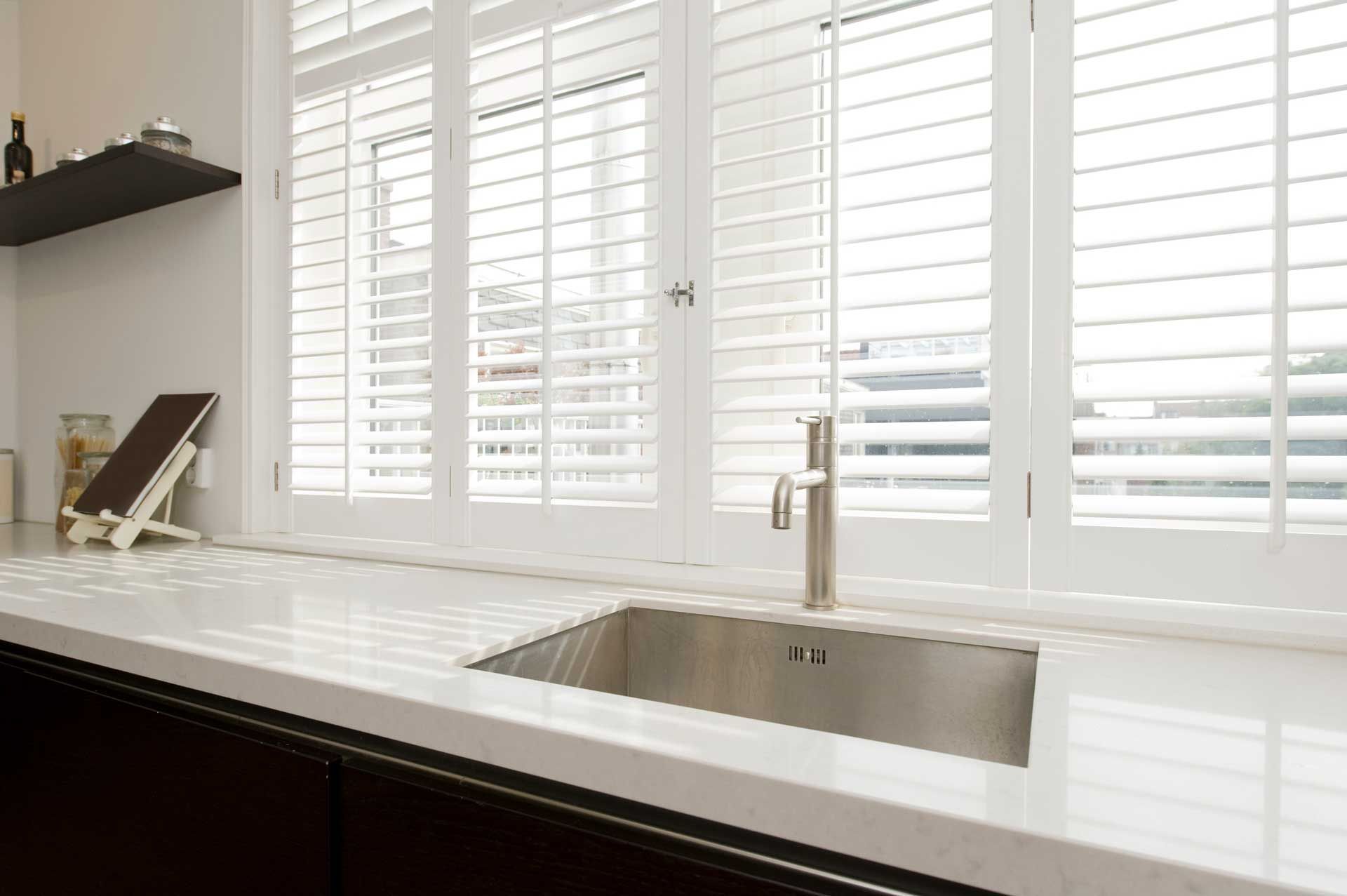
- Kitchens and dining rooms. They wipe clean, tolerate cooking humidity, and tilt to handle the dinner-hour sun.
- Bathrooms and pool baths. In vinyl, the best product available for that environment — privacy, ventilation and moisture tolerance at once.
- Odd-shaped windows. Arches, angles and specialty shapes are handled beautifully by custom window shutters and awkwardly by nearly everything else.
Where something else serves you better
An honest advisor tells you when not to buy the expensive product. Shutters are the wrong tool when:
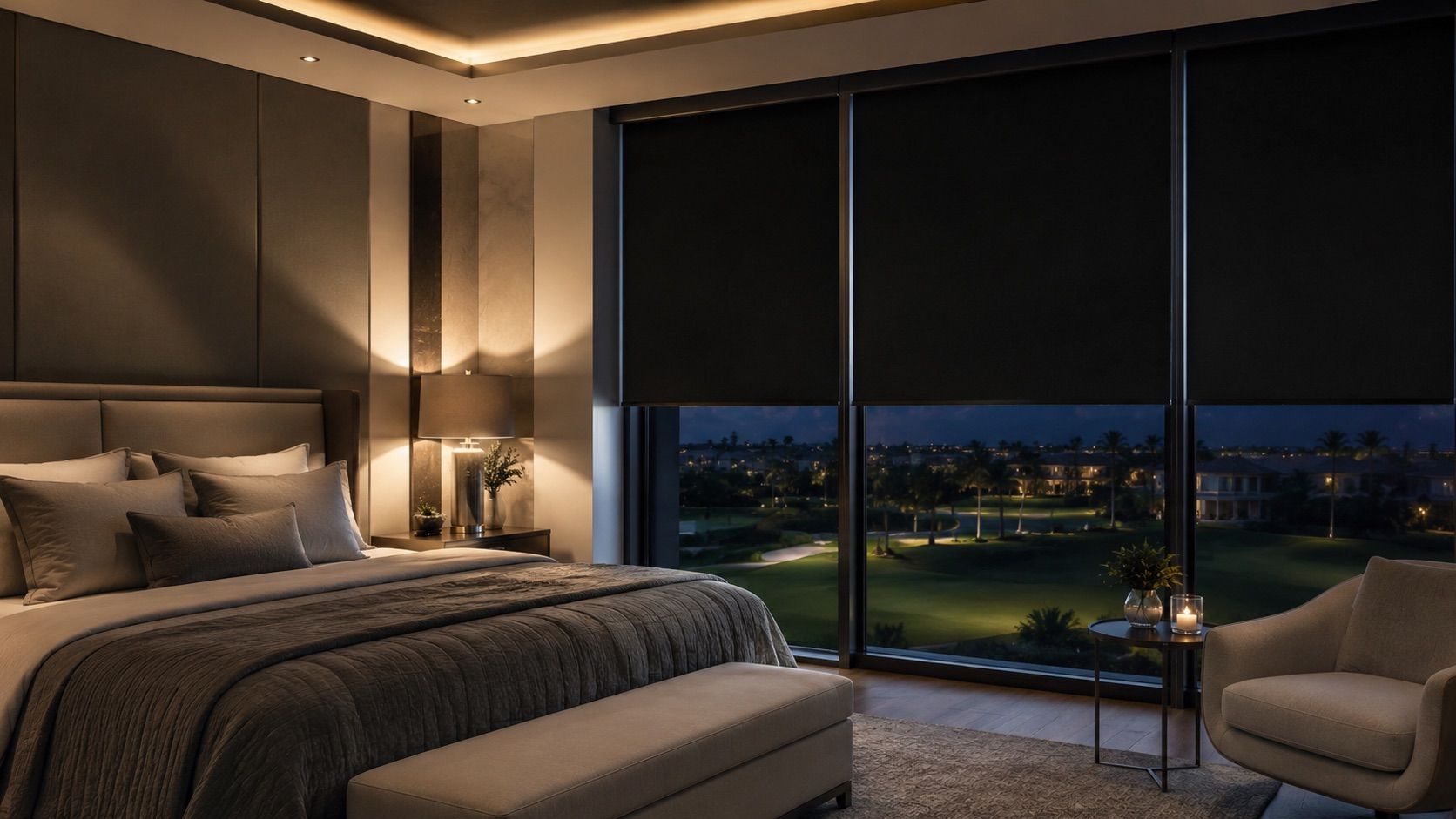
- You need true blackout. Light passes between closed louvers. If a room must be genuinely dark for sleep, a room-darkening shade does that job properly. Shutters can layer over one for looks, but they will not black out a room alone.
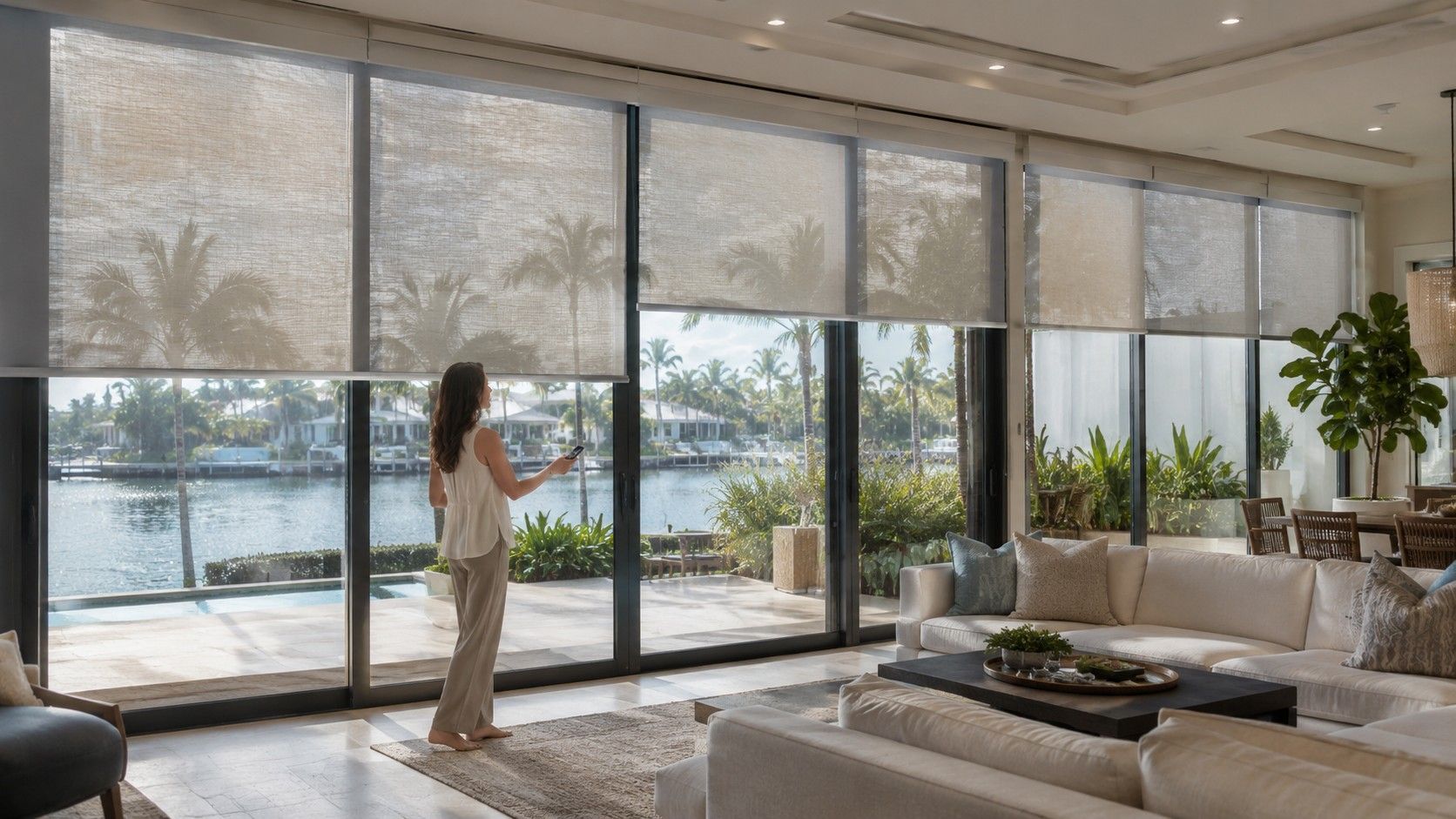
- You want maximum unobstructed view. Even the thinnest stiles occupy glass. On a picture window where the water view is the entire point, a shade that rolls completely out of sight may serve you better.
- It is a bedroom egress window. Code requires certain bedroom windows to open fully for escape, and panel layout has to respect that.
- You are moving soon. Shutters are built to your exact openings and convey with the house. Two years from selling, that money may work harder elsewhere.
- Casement windows with cranks. These need cut-outs or an outside mount to clear the hardware — workable, but it requires planning.
What to Ask During Your Consultation
Bring this list to whoever you have out. A good installer answers all of it without hesitating.
About the product:
- Which material do you recommend for each room, and why that one there?
- What does the warranty cover — finish, hardware and warping separately?
- What hardware is used on the hinges and tilt, and how does it hold up near salt air?
- What is the maximum panel width in this material, and how many panels will my widest opening need?
About the fit:
- Is there enough recess depth for an inside mount on my impact windows, or do we need an outside mount?
- Which frame style are you specifying, and will it cover the old holes and uneven returns?
- Hidden tilt or visible rod — and do you recommend split tilt in the bedrooms?
- Will any window need a divider rail, and where will it land visually?
About the process:
- Who measures, and who installs — your team, or a subcontractor?
- What is the lead time, and what happens if a panel arrives wrong?
- Are you licensed and insured, and can I see recent local work?
Mistakes That Cost Homeowners Money
- Measuring it yourself to save a step. Shutters are cut to the opening. There is no adjusting a panel that came in a quarter-inch wide. Florida openings are rarely perfectly square and impact windows complicate depth — this is the wrong product to guess on.
- Choosing hardwood for a bathroom because it looked better in the showroom. The showroom is climate controlled. Your pool bath is not.
- Ignoring hardware on a coastal home. Near the water, the panels routinely outlast the hinges. Ask specifically.
- Specifying one louver size for the whole house without checking scale. A 4.5 inch louver on a small bathroom window looks wrong; a 2.5 inch louver on a tall great-room window looks busy.
- Skipping split tilt in bedrooms. It adds little and it is the feature homeowners most often tell us afterward they are glad they specified.
- Not confirming community rules first. Many Palm Beach County associations require a uniform white or off-white appearance from outside. Confirm before ordering, not after.
Resale Perception in Palm Beach County
Shutters occupy an unusual position among window treatments: buyers read them as part of the house rather than as furnishings. They typically convey with the property at closing, they photograph well in listing images, and in a market where white-on-white interiors are the prevailing taste, they signal a finished home.
We would not promise a specific return — nobody honestly can. What we can say is that of everything we install, shutters are the product sellers least often try to take with them, and the one buyers most often comment on. That is a fair proxy for perceived value.
Where we work. Surfside Blinds is a licensed and insured, family-owned company based in Delray Beach, installing custom plantation shutters and window treatments throughout Boca Raton, Delray Beach, Boynton Beach, Highland Beach, Gulf Stream, Ocean Ridge, Lake Worth Beach and the surrounding Palm Beach County communities — single-family homes, condos and waterfront properties.
Frequently Asked Questions
Are plantation shutters a good choice for South Florida homes?
Yes, provided you match the material to the room. Composite and vinyl are engineered for the moisture and temperature swings common here, making them the safer default in Boca Raton, Delray Beach and Boynton Beach. Hardwood is beautiful and allows wider panels with thinner frames, but it belongs in controlled interior rooms rather than bathrooms, pool baths or west-facing glass.
What is the difference between composite, vinyl and wood shutters?
Wood is milled hardwood such as basswood — widest stain range, thinnest profiles. Composite uses an engineered wood core with a durable coating, giving strong moisture resistance in a painted finish. Vinyl and PolySatin-style shutters are solid polymer, the most moisture-resistant of the three and the right pick for wet rooms, though limited to white and off-white and needing reinforcement on wide panels.
Will plantation shutters warp in Florida humidity?
Quality composite and vinyl shutters are specifically engineered to resist warping, swelling and peeling, which is why they dominate this market. Low-grade or untreated wood is what fails — particularly in bathrooms, near sliders that admit salt air, or on windows taking hours of direct afternoon sun. Material choice matters more than any other decision you make.
What louver size should I choose?
3.5 inch is the most common and fits most windows. 4.5 inch gives a cleaner view with fewer louvers per panel and suits large windows and open living spaces. 2.5 inch fits small windows and cottage-style homes. It comes down to window size and ceiling height, which is why seeing samples in the room is worth the appointment.
Can plantation shutters be installed on impact windows?
Usually yes, but mounting depth has to be checked first. Impact and hurricane-rated windows often sit in shallower recesses that limit an inside mount. The solution is typically an outside mount, a shallower frame profile or a build-out — identified at measuring, not at installation.
How do you clean plantation shutters?
A dry microfiber cloth or duster along the louvers handles routine care. Composite and vinyl can be wiped with a damp cloth and mild cleaner. Avoid soaking any shutter and avoid harsh solvents on painted or stained finishes. In coastal homes, wiping the hinges and tilt hardware occasionally is worth the two minutes.
Do plantation shutters add value when selling?
They are generally seen as a permanent upgrade rather than a furnishing, and they typically stay with the home at closing. Buyers in Palm Beach County tend to perceive them as a finished, high-end feature. Not a guaranteed dollar-for-dollar return, but one of the few window treatments that reads as part of the house.
Does Surfside Blinds offer a free in-home shutter consultation?
Yes. We provide free in-home consultations across Boca Raton, Delray Beach, Boynton Beach and Palm Beach County — product samples you can compare in your own light, expert measuring and professional installation. Call (561) 867-0484 to schedule.
Shutters Are a One-Time Decision. Make It With Someone Local.
Surfside Blinds is family-owned and based in Delray Beach — you deal directly with the owner, not a rotating sales team. Free in-home consultation, real product samples, expert measuring and professional installation across Palm Beach County. Licensed, insured, and rated five stars by 40+ local homeowners.
Book Your Free In-Home Consultation or call (561) 867-0484