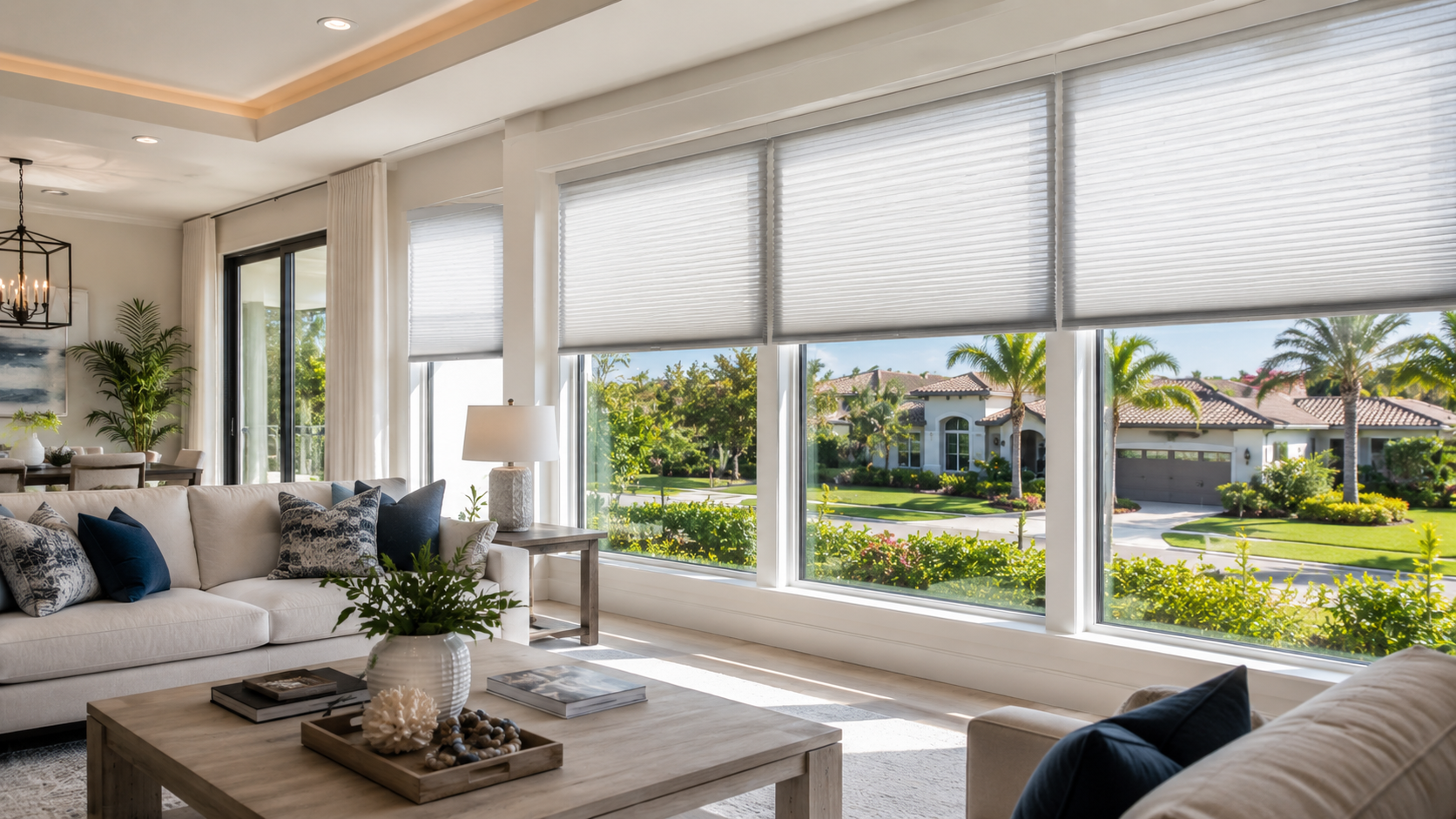

Every summer in Boynton Beach, the same thing happens. The temperature climbs, the AC kicks on earlier, runs longer, and by the time the utility bill arrives most homeowners just accept it as the cost of living in South Florida. It is not. At least not entirely.
A significant portion of that bill — in some homes as much as 30% of total cooling costs — comes directly through your windows. Not because the windows are broken or poorly sealed, but because the sun is doing exactly what it is designed to do: transferring heat through glass and into your living space. What is sitting over those windows matters more than most people realize until they actually change it.
The Science Is Simple Even If the Bill Does Not Feel That Way
Glass does very little to stop solar heat. When direct sun hits an untreated window — especially a west or south-facing one in a Boynton Beach home — the heat passes straight through and gets absorbed by your floors, furniture, and walls. Your AC then has to work against that stored heat for hours, not just while the sun is shining.
The right window treatment interrupts that process before it starts. Solar shades are specifically engineered for this — they are not decorative coverings with a bonus energy claim, they are purpose-built heat filters. The fabric itself is designed to block solar radiation before it penetrates the glass, which means less heat enters the room and your AC never has to compensate for it in the first place.
"The AC is not working harder because of the temperature outside. It is working harder because of the heat that got in through your windows hours ago."
That distinction matters because it changes where you focus the fix. Lowering your thermostat setting does not solve the problem. Upgrading your AC unit does not solve the problem. Addressing what is happening at the window solves the problem.
What Solar Shades Actually Do in a Boynton Beach Home
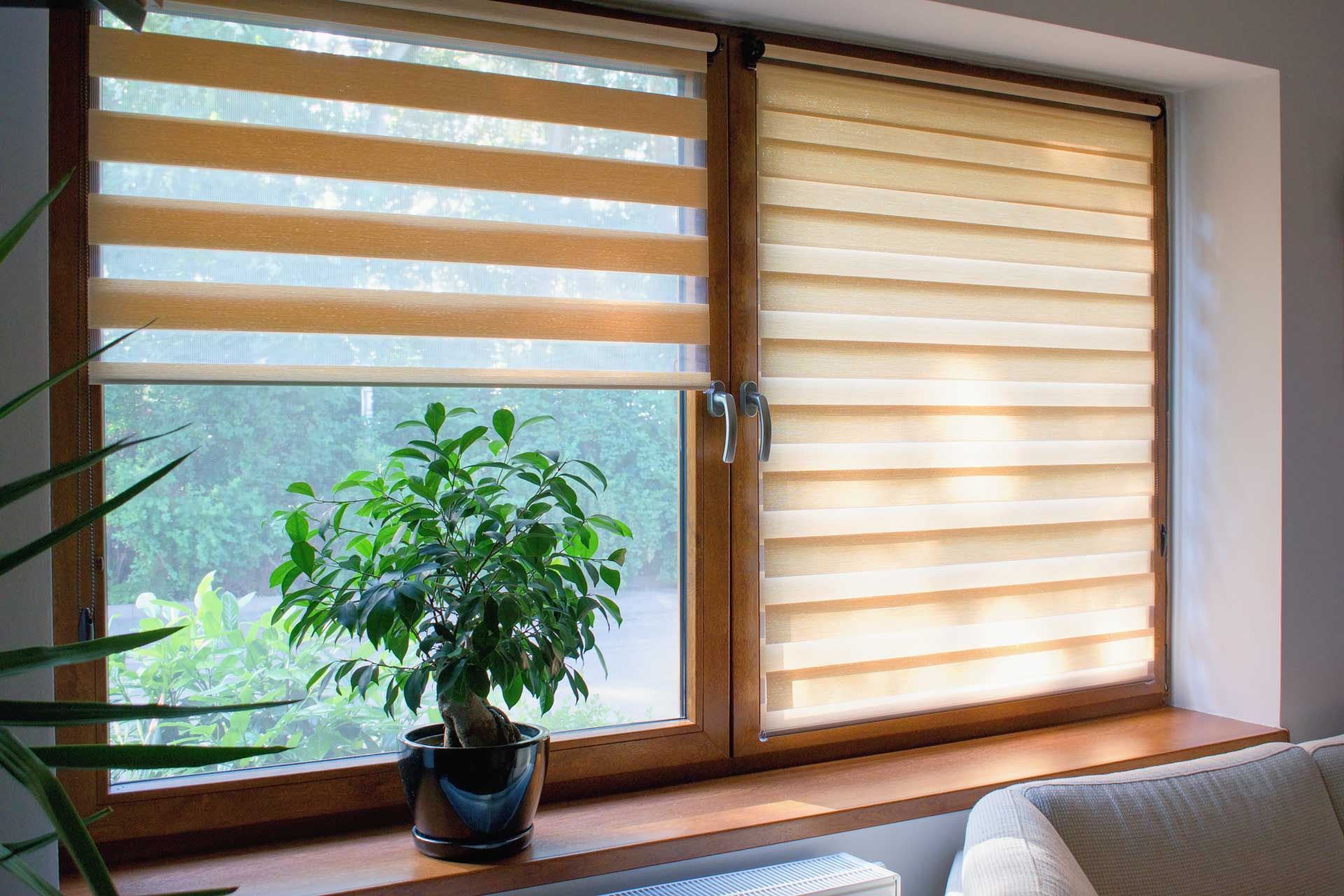
Solar shades filter light using a woven mesh fabric with a specific openness factor — typically ranging from 1% to 14%. The lower the number, the tighter the weave and the more heat gets blocked. For most west and south-facing windows in Boynton Beach, a 3% to 5% openness factor provides the strongest heat reduction while still allowing filtered natural light into the room.
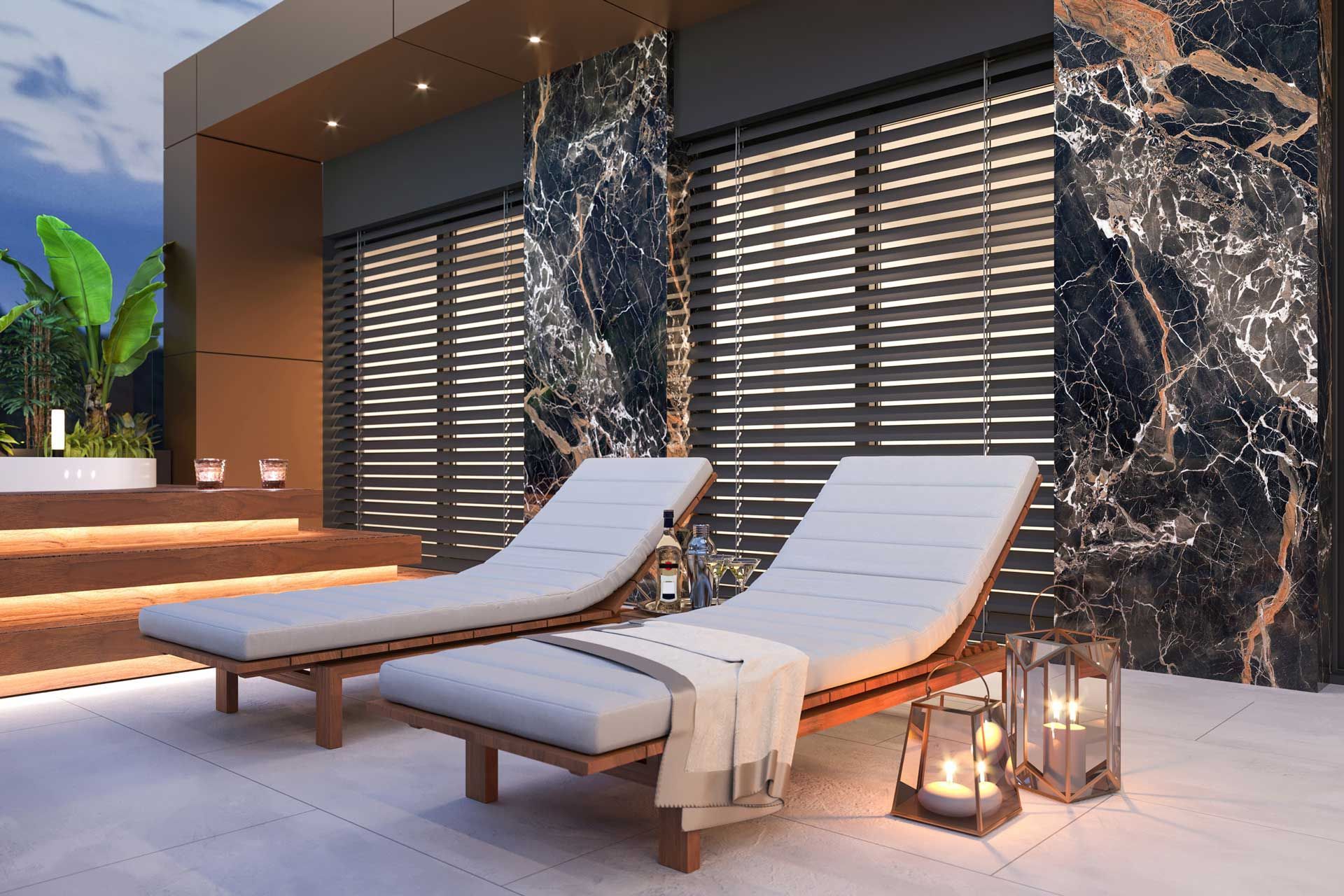
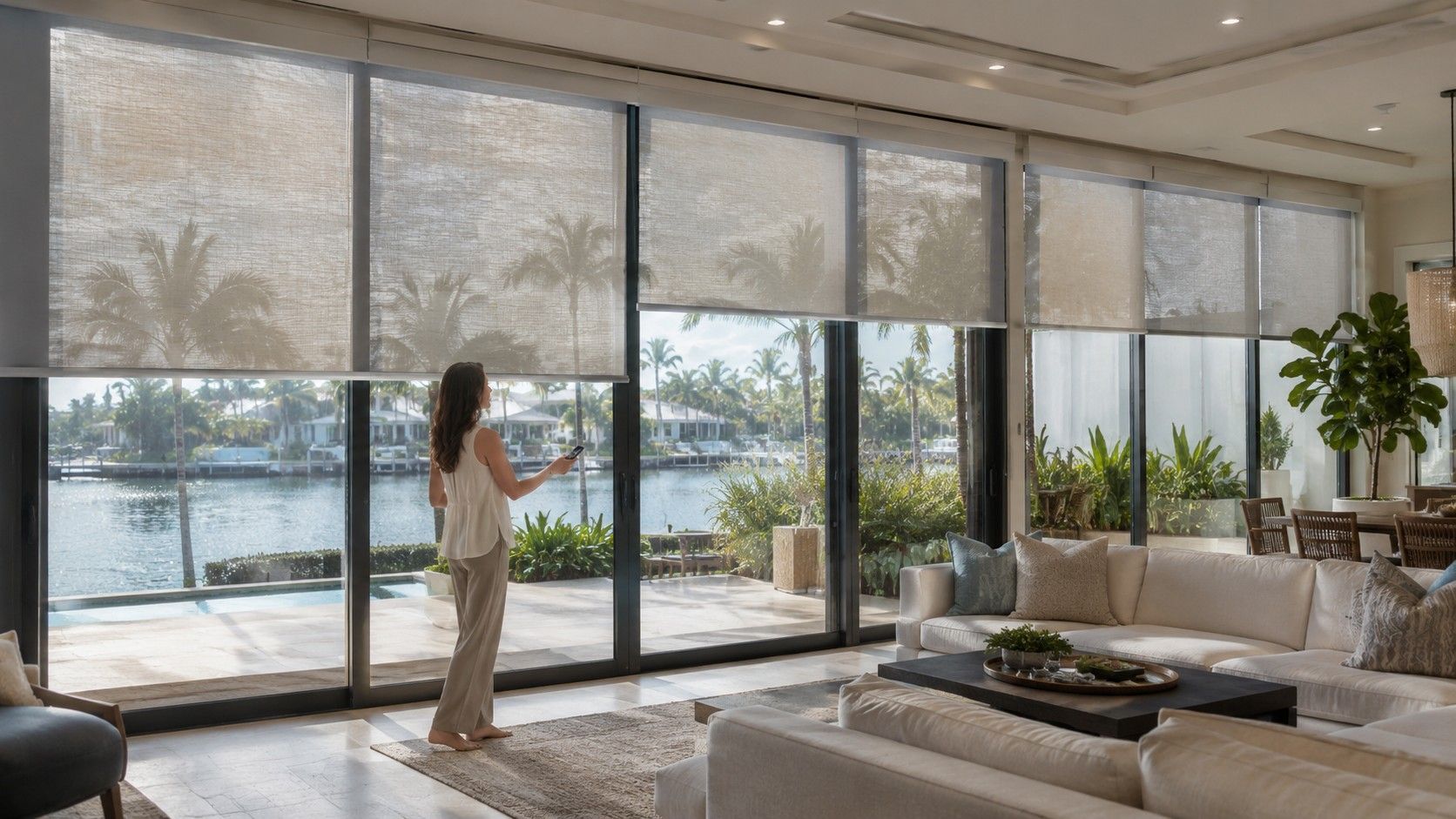
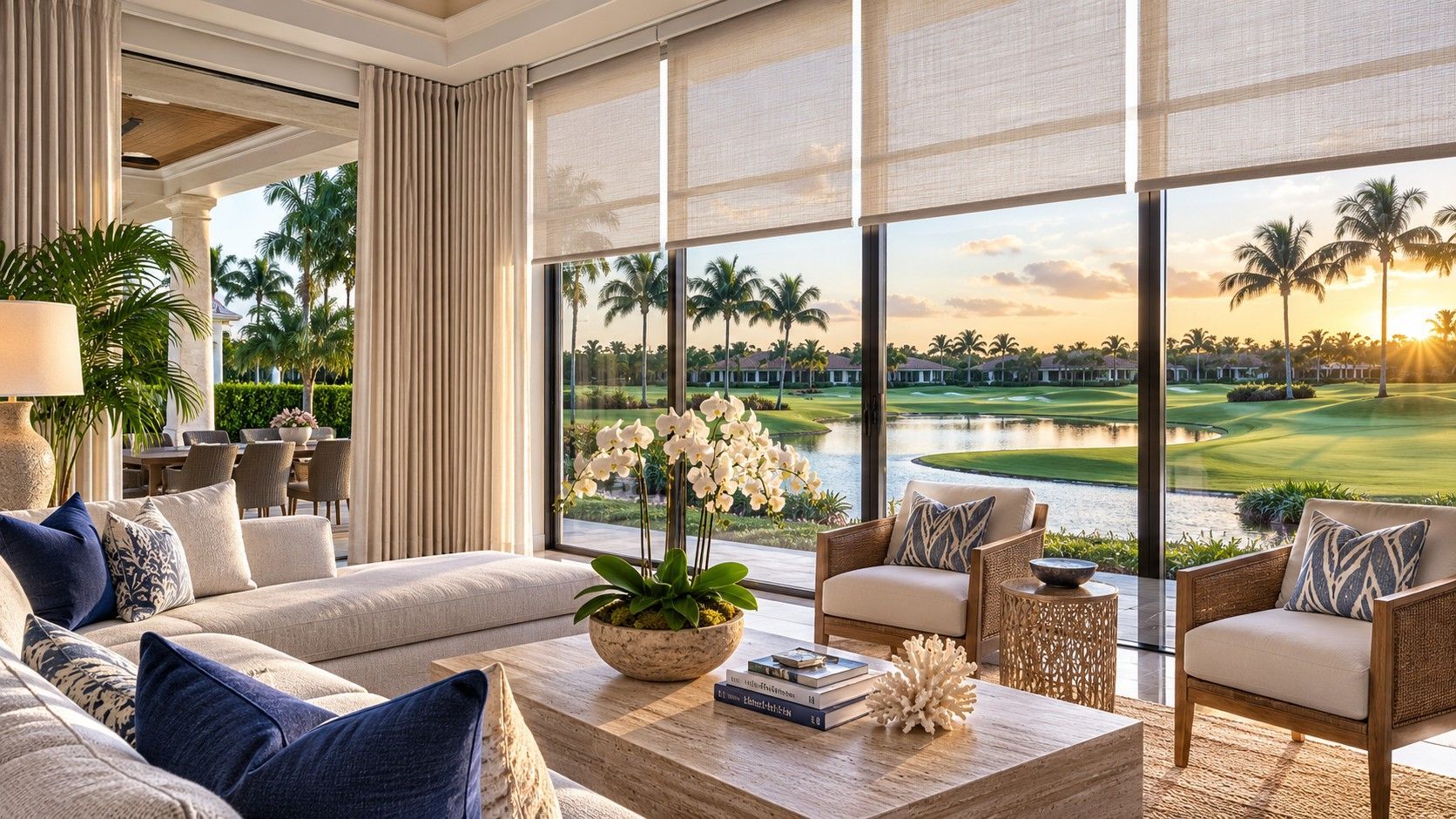
Unlike blackout shades, solar shades do not darken the room. They reduce glare and heat while preserving your view to the outside — which matters in a market like Boynton Beach where a lot of homes have pool or water views that you actually want to see. You get heat protection without feeling like you are sitting in a cave.
The openness factor explained: 1% openness blocks the most heat and provides the most privacy but the least view. 5% is the most popular choice for Boynton Beach homes — strong heat blocking, good glare reduction, view preserved. 10% lets in more light and view but blocks less heat. The right choice depends on your window's sun exposure and how much you care about the view from that specific room.
The Windows That Are Costing You the Most
Not all windows contribute equally to your AC bill. In most Boynton Beach homes the biggest offenders are west-facing windows that take the full force of the afternoon sun from roughly 1 PM to sunset, and south-facing windows that get direct exposure for most of the day. These are the windows where energy efficient window treatments pay off fastest.
East-facing windows are less of a problem — morning sun is lower intensity and the exposure ends by midday. North-facing windows rarely get direct sun at all in Florida and are low priority for heat blocking.
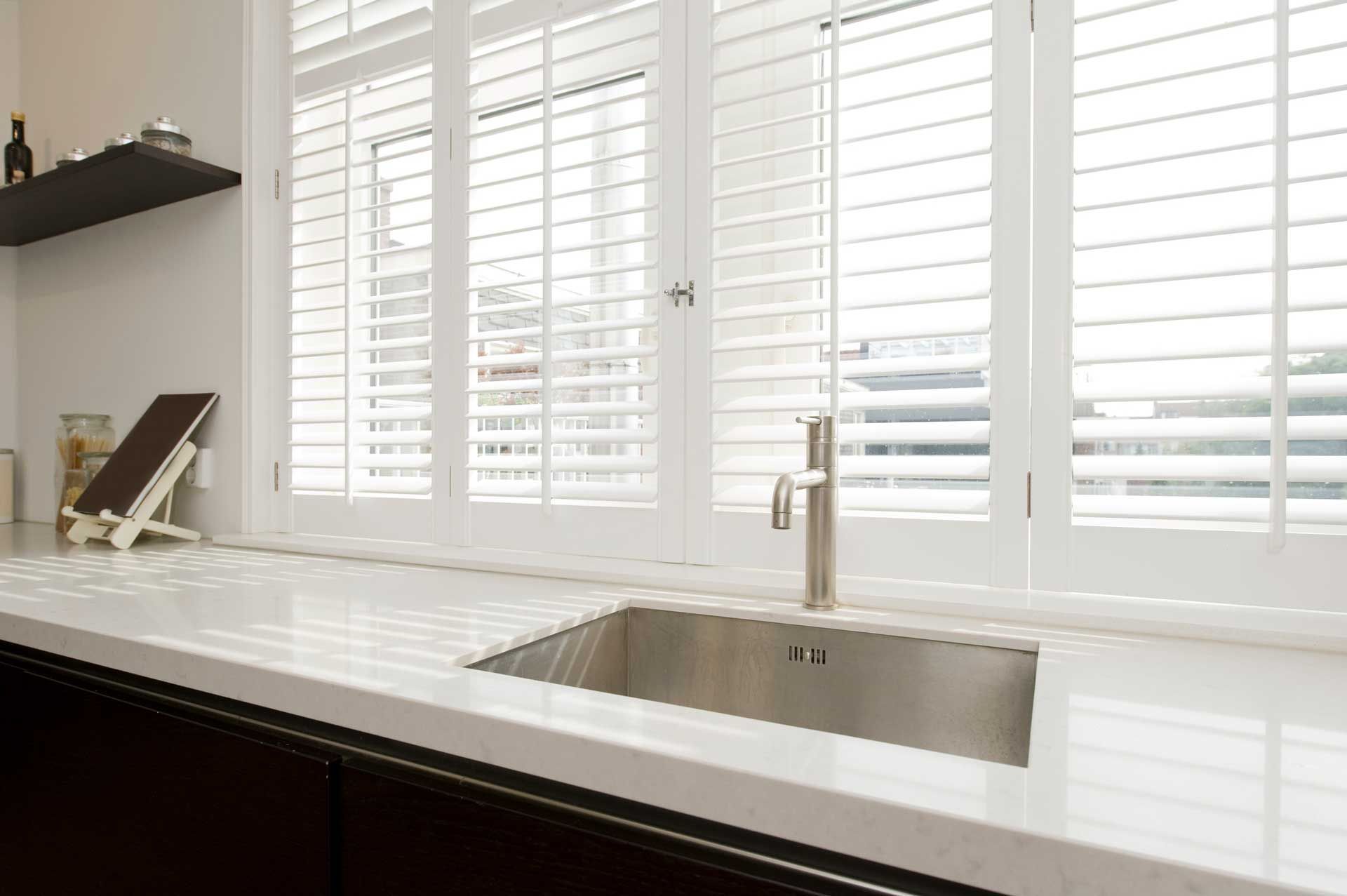
If you have sliding glass doors facing west or south — which is extremely common in Boynton Beach floor plans — those are often the single biggest source of heat gain in the entire house. A large expanse of untreated glass facing the afternoon sun is essentially a solar collector pointed directly at your living room. Panel track shades or wide-format roller shades on sliding doors make a measurable difference immediately.
Cellular Shades — The Other Option Worth Knowing About
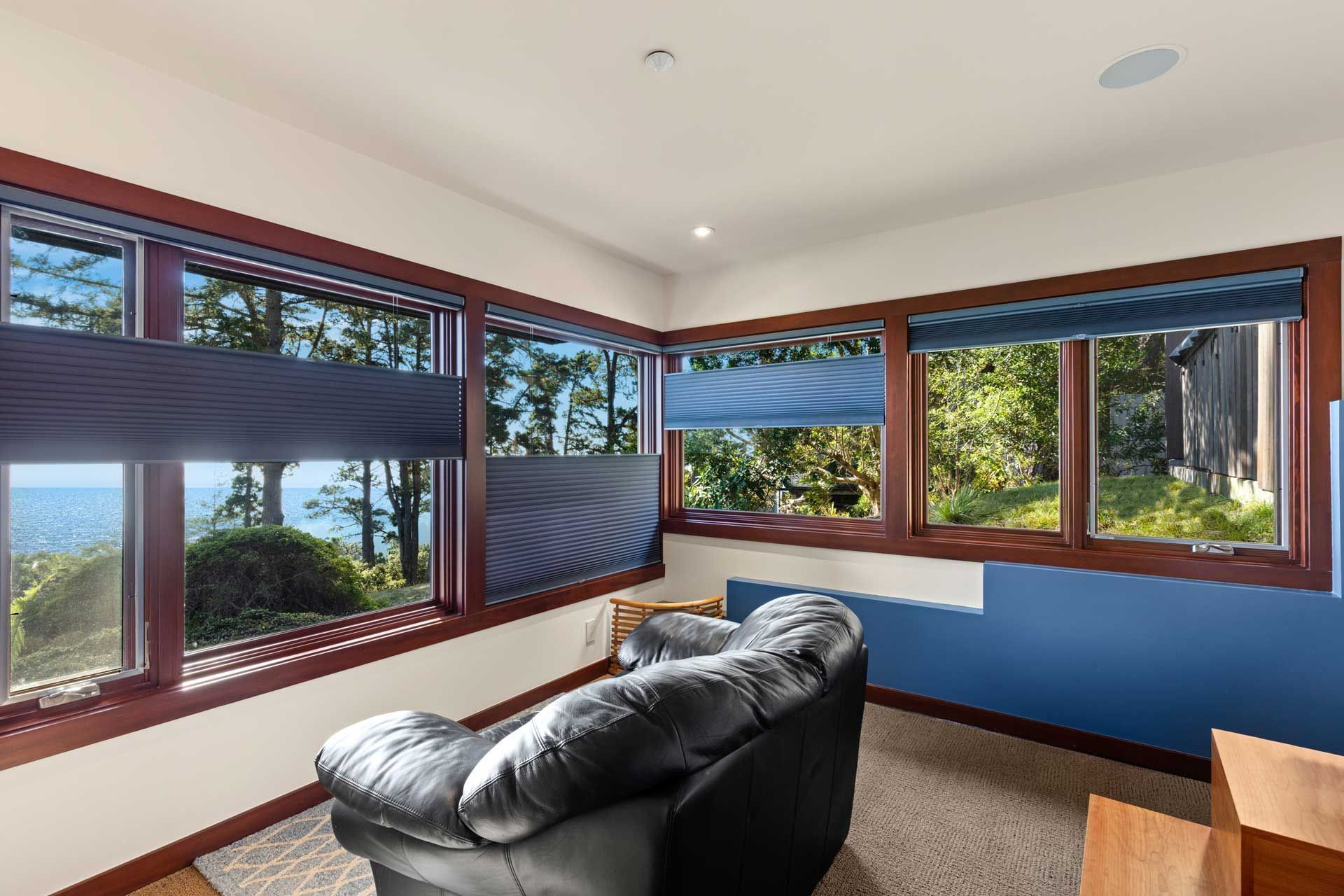
Solar shades handle heat gain from direct sun. Cellular shades — also called honeycomb shades — handle insulation. They work differently: instead of filtering solar radiation, they trap air in their honeycomb pockets and create a barrier between the window and the room. This is particularly effective on windows that do not get direct sun but still allow heat transfer through the glass itself.
For Boynton Beach homes, the practical answer is often a combination. Solar shades on the windows with the most direct sun exposure. Cellular shades on bedrooms and north-facing windows where insulation matters more than solar blocking. The two products solve slightly different problems and work best when matched to the window's actual sun exposure.
What This Looks Like on a Real Bill
The Department of Energy has documented that up to 30% of residential cooling energy is lost through windows in homes without proper window treatments. In a Boynton Beach home where the average summer electric bill runs several hundred dollars a month, that is a real number worth addressing.
Most homeowners who make the switch to solar shades on their highest-exposure windows report a noticeable difference within the first full billing cycle. The rooms feel cooler — not because the AC is running more, but because significantly less heat is entering in the first place. The AC catches up faster and cycles off sooner. Over a full South Florida summer that adds up.
The secondary benefit that surprises people is how much more comfortable the room feels during the day even before the AC kicks on. Radiant heat from direct sun is uncomfortable in a way that air temperature alone does not capture. Blocking that direct solar load changes how the room feels physically, not just what the thermostat reads.
Where to Start
The fastest way to identify which windows are costing you the most is to walk your home on a clear afternoon between 2 PM and 4 PM. Stand in front of each west-facing window and feel the heat coming through. That is your priority list. Those are the windows where energy efficient window treatments in Boynton Beach will give you the fastest return.
Surfside Blinds offers free in-home consultations throughout Boynton Beach. We look at your specific windows, sun exposure, and existing treatments, then make honest recommendations about what will actually move the needle on your cooling costs. No pressure, no obligation — just a real conversation about what your home needs.